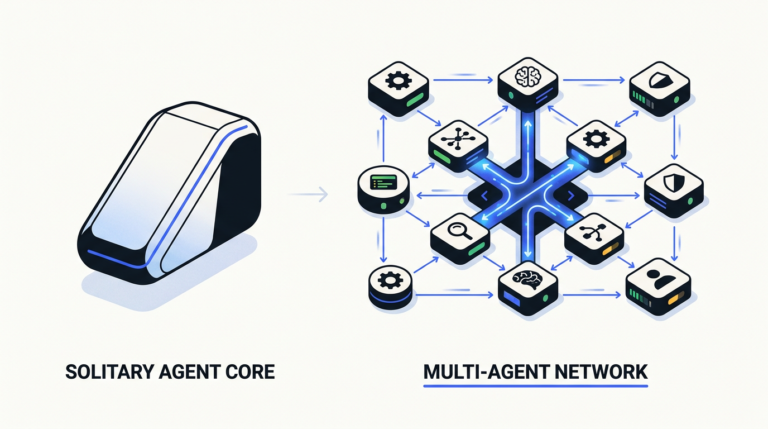
Single-Agent vs Multi-Agent Systems: A Clear Guide
A single-agent system uses one AI agent to handle a task end to end, while a multi-agent system…
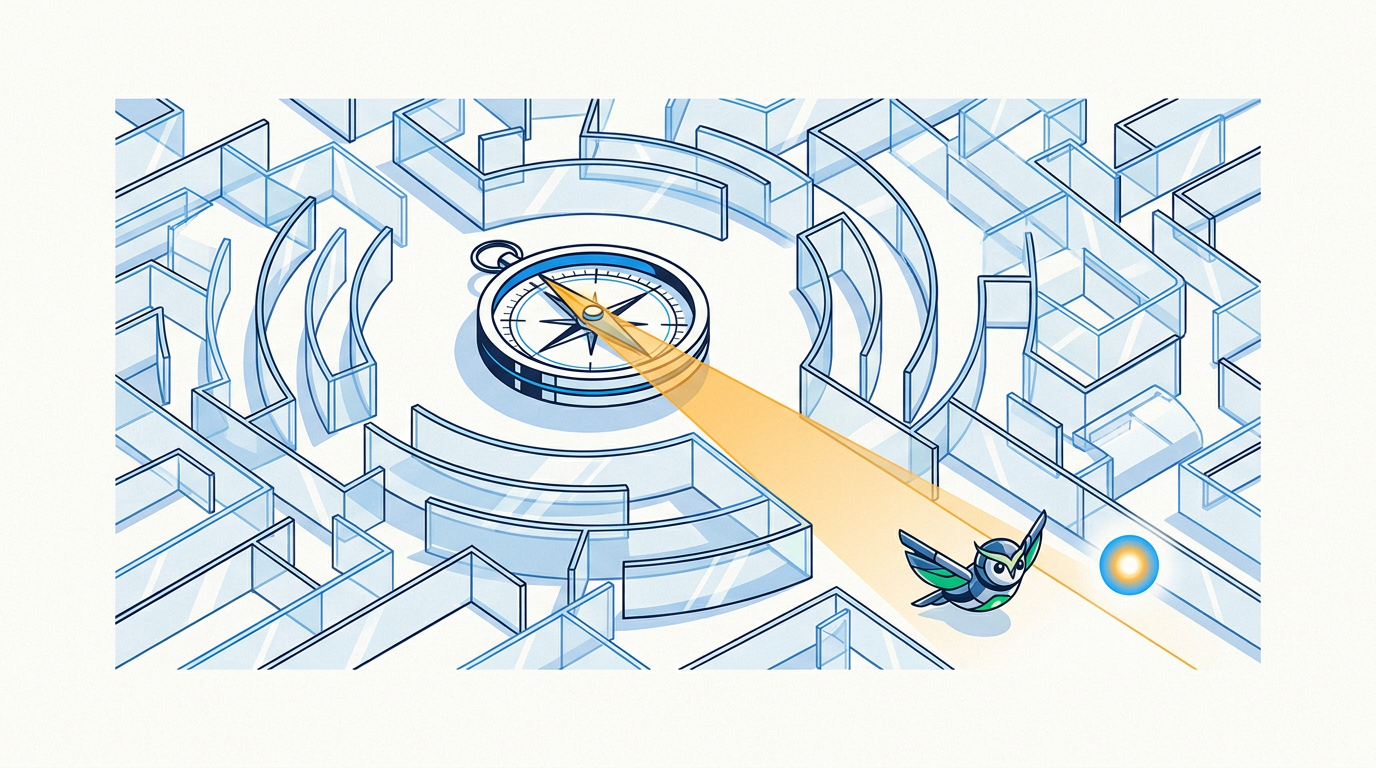
A goal-based agent is an AI agent that chooses actions by asking whether they move it closer to an explicit goal. Instead of just reacting to the present, it uses search and planning to consider future states, making it far more flexible than a simple reflex agent.
Most AI you hear about is reactive. It sees something, it does something. A spam filter sees a suspicious email, it moves it to junk. A smart thermostat sees the room is cold, it turns on the heat. This is useful, but it’s checkers, not chess. It’s a knee-jerk reflex.
The more interesting AI agents are the ones that can think a few moves ahead. This is where the goal-based agent comes in. This type of AI doesn’t just react to what’s happening right now; it has a destination in mind and makes a plan to get there. It’s the difference between swerving to avoid a pothole (a reflex) and using GPS to navigate to a new city (a goal).
Understanding the goal-based agent in artificial intelligence is key to grasping where automation is heading. It’s the foundational concept behind systems that don’t just follow simple rules, but actively problem-solve to achieve a specific objective.
A goal-based agent is an AI that selects its actions based on how close they get it to a desired goal. It has an explicit objective it’s trying to achieve. To do this, it needs to understand its current situation and predict how its actions will change the world, allowing it to choose the path that leads to success.
Think of it like a Roomba with an upgrade. A simple robot vacuum might just bounce off walls randomly (a reflex). A goal-based robot vacuum would have a map of your house (its world model) and the objective “clean every room.” It would then plan a route, cleaning section by section, until its goal is met.
This ability to consider future states is what makes a goal-based agent so much more capable than its simpler cousins. It’s not just reacting; it’s planning.
A goal-based agent operates in a continuous loop, but it’s a much smarter loop than a simple reflex. It involves four key stages: perception, planning, execution, and adaptation.
Perception: The agent uses its sensors to gather information about its environment. For a self-driving car, this would be cameras, LiDAR, and radar detecting other cars, pedestrians, and traffic lights. For a financial trading bot, it’s market data feeds.
Planning: This is the agent’s brainpower. It takes the sensor data and compares it to its internal “world model” (its map of how things work). Then, it asks the crucial question: “Given my current state and my goal, what sequence of actions will get me there?” It considers various future states to find a viable path. This is where it uses techniques like search algorithms to chart a course.
Execution: Once a plan is chosen, the agent uses its actuators to carry it out. An actuator is anything that allows the agent to affect its environment. For a robot, it’s motors and grippers. For a marketing AI, it might be sending an email or launching an ad campaign.
Adaptation: The world isn’t static. The agent constantly perceives changes and updates its plan accordingly. If a self-driving car’s planned route is blocked by an accident, it re-evaluates and finds a new path to its destination.
That “planning” step is doing a lot of heavy lifting. It’s not magic; it’s math. Goal-based agents rely on well-established planning algorithms to find their way. You don’t need to be a developer to get the gist.
If you were to draw a blueprint for a goal-based agent, it would look something like this. Don’t let the boxes scare you; it’s a simple flow.
world model.This loop of perceiving, modeling, planning, and acting is what allows the agent to pursue an objective intelligently.
The most common example is robotics and autonomous vehicles. A car trying to navigate from one address to another is a perfect illustration of a goal-based agent. But this technology is far from limited to things with wheels.
Here are some other examples that show the versatility of this approach:
world model is updated. Its plan changes from “introduce next topic” to “provide a remedial lesson on derivatives.” The objective is fixed, but the path to get there is dynamic.objective.goal-based agent using a simulated environment to search for a solution that meets a specific scientific criterion. This is how AI becomes a powerful tool for problem-solving at a massive scale.Not all AI agents are created equal. The key difference is how they make decisions. A goal-based agent is a crucial middle ground between simple reactors and hyper-rational optimizers.
| Agent Type | How It Decides | Analogy | Best For |
|---|---|---|---|
| Simple Reflex Agent | “If this, then that.” Reacts only to the current state. No memory, no future planning. | Touching a hot stove and instantly pulling your hand away. Pure reflex. | Simple, repetitive tasks in a predictable environment (e.g., a thermostat). |
| Goal-Based Agent | “Will this action get me closer to my goal?” Considers future states to achieve a binary (yes/no) goal. | Using a map to get to a party. You have a destination and you plan a route to get there. | Tasks with a clear, defined endpoint where the path needs to be figured out (e.g., navigation, solving a puzzle). |
| Utility-Based Agent | “Which action makes me ‘happiest’?” Chooses the action that maximizes a ‘utility’ or happiness score. | Choosing the best route to the party. One route is faster, another is more scenic, another has no tolls. It weighs these factors to pick the “best” path, not just any path. | Complex scenarios with conflicting goals or where the *quality* of the outcome matters (e.g., a trading bot balancing risk and reward). |
The critical difference between a goal-based and a utility-based agent is the difference between “success” and “satisfaction.” A goal-based agent only cares if it achieved the goal (Yes/No). A utility-based agent cares about how well it achieved the goal, assigning a score to different outcomes. It’s the next step up in complexity and is often built on top of a goal-based framework.
Goal-based agents are powerful, but they aren’t the solution to everything. They have clear limitations, and knowing them tells you when to reach for a different tool.
utility-based agent, which can handle degrees of success, often performs better.The real art of AI automation isn’t just knowing the tools; it’s knowing which tool is right for the job. A goal-based agent is perfect for when you have a clear destination, but for navigating the messy, nuanced world of trade-offs and preferences, you’ll need to upgrade.
What is the difference between a goal-based and a model-based agent?
This is a common point of confusion. A model-based reflex agent also has an internal “model” of the world, but it uses it to react to the present. A goal-based agent is a type of model-based agent that uses its model for a specific purpose: to plan for the future to achieve a goal. All goal-based agents are model-based, but not all model-based agents are goal-based.
Is a goal-based agent a type of reinforcement learning?
Not directly, but they are very closely related. A goal-based agent is given its goal explicitly. In reinforcement learning (RL), an agent learns the best actions through trial and error, receiving rewards or penalties. You can use RL to train an agent to achieve a goal, effectively teaching it the best way to behave like a goal-based agent. They are two different concepts that are often used together.
Why is a goal-based agent more flexible than a simple reflex agent?
Flexibility comes from the ability to adapt. A simple reflex agent has hardcoded rules. If the environment changes in a way that makes a rule invalid, the agent breaks. A goal-based agent’s knowledge is separated from its actions. If an obstacle appears, it doesn’t need a new rule for “if obstacle, do this.” It simply updates its world model and re-runs its planning algorithm to find a new path to the same goal. It can handle novelty far better.

Part of the Thinker's Automation Labs content team. Researches with the SEO Blog Research Agent, drafts the piece, and routes it through review before publishing. Every claim is fact-checked against primary sources.
A single-agent system uses one AI agent to handle a task end to end, while a multi-agent system…
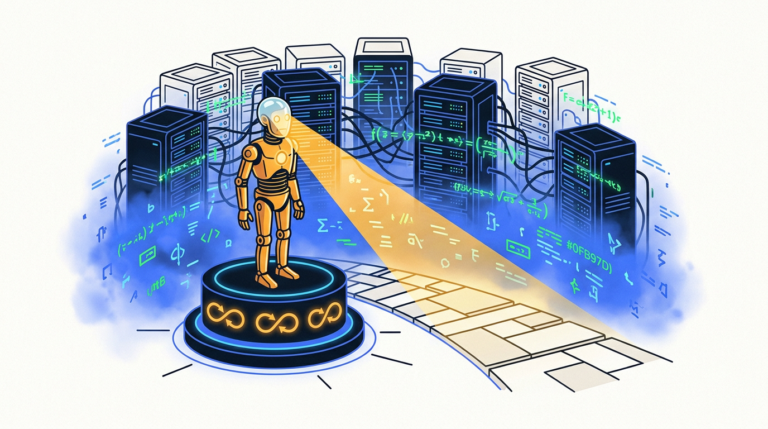
A learning agent is an AI agent that improves its own performance over time by learning from feedback.…
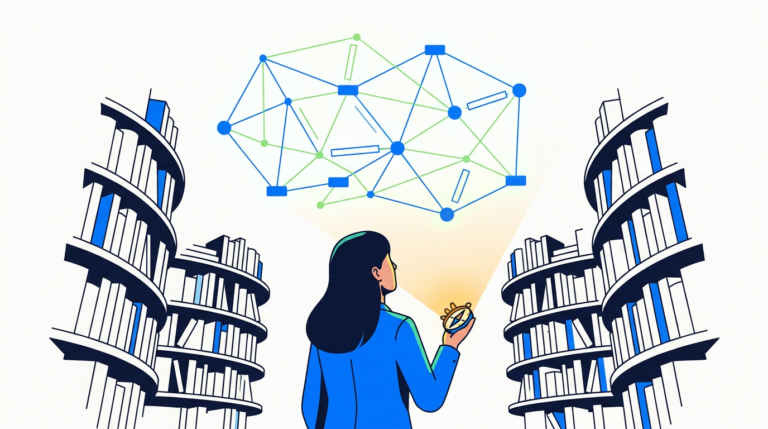
A utility-based agent is an AI agent that chooses actions to maximize a utility function, a score of…