Can AI Predict the Future? What It Can (and Can’t) Do
AI can’t see the future — it forecasts probabilities from patterns in past data. It’s remarkably good at…
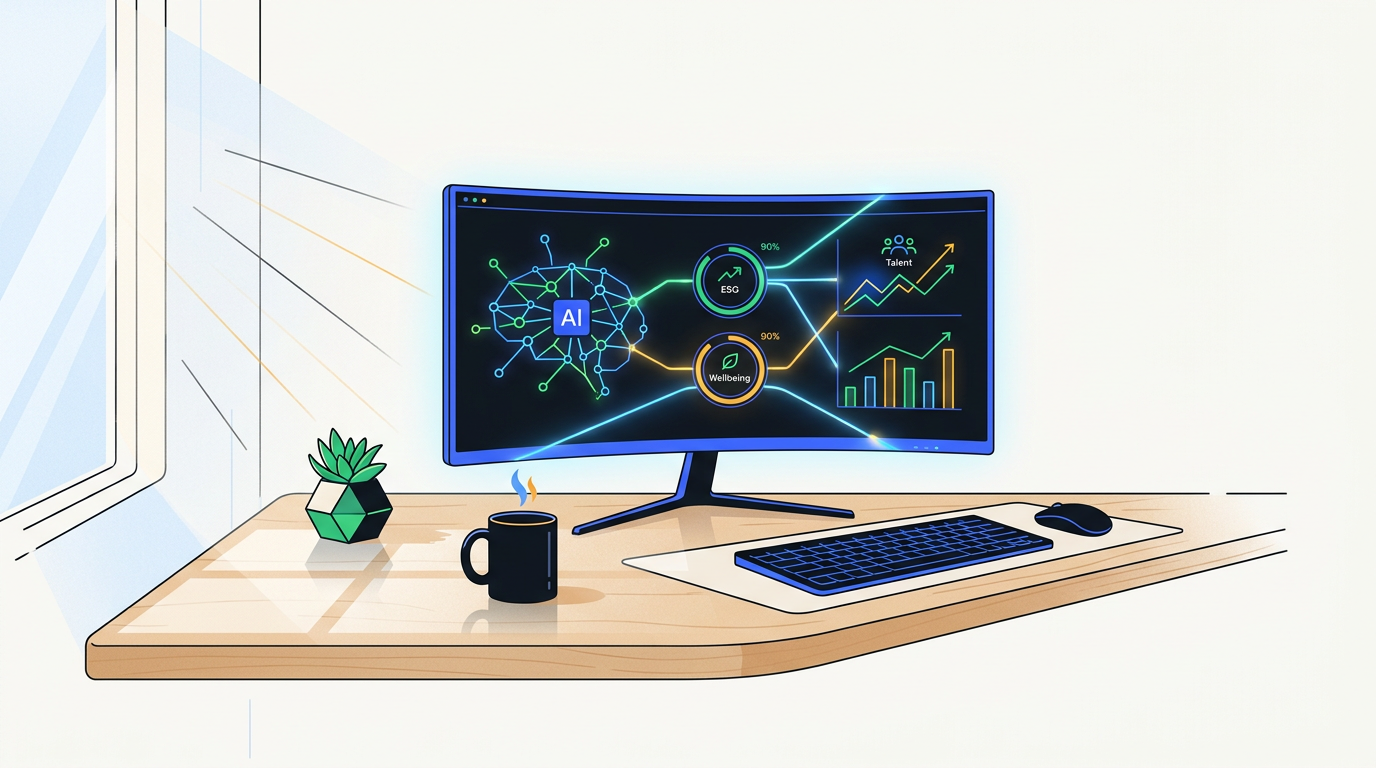
The future of HR is data-driven and skills-based. AI now handles screening and admin, freeing HR to focus on people analytics, employee experience, and internal mobility — while pay transparency, well-being, and ESG become central to attracting and keeping talent.
For decades, Human Resources was the department of paperwork and policies. It was a necessary, administrative function focused on compliance, payroll, and managing headcount. That era is over. The future of HR isn’t about managing resources; it’s about understanding and developing people. It’s a strategic shift from reacting to problems to predicting them.
The engine driving this change is a combination of cultural shifts and, of course, artificial intelligence. But don’t get distracted by the hype. AI isn’t a magic wand. It’s a powerful tool that, when applied correctly, automates the tedious work and surfaces the human insights that actually matter. The future of work for HR professionals is less about administration and more about becoming data analysts, experience designers, and talent strategists.
This guide breaks down the core future HR trends that are worth your time. We’ll tell you what they are, why they matter, and what you should actually do about them.
The biggest change in HR is its new seat at the executive table. For years, HR leaders presented reports on what happened—last quarter’s turnover rate, time-to-hire metrics, compliance training completion. It was a backward-looking function.
Now, the expectation is for HR to provide forward-looking intelligence. Instead of just reporting the turnover rate, a strategic HR leader uses data to predict which teams are at risk of burnout and proposes interventions before people leave. This is the core of the digital transformation in human capital management: moving from a cost center to a value driver.
This shift is powered by better HR technology and a focus on what truly impacts business performance: the skills of your people and their experience at work. It requires a new mindset where HR is not just supporting the business strategy, but actively shaping it through workforce planning and talent development.
The HR technology landscape used to be a collection of clunky, siloed systems. You had one for payroll, another for hiring (the Applicant Tracking System, or ATS), and maybe a learning management system (LMS) collecting digital dust in a corner. They rarely talked to each other.
AI changes this by acting as an intelligent layer that connects these systems and makes them useful. Instead of just storing data, AI can analyze it. Think of it this way: your old HR software was a filing cabinet; the new HR tech stack is a team of analysts.
This is leading to a new class of specialized AI tools that solve one problem extremely well. You might have an AI tool that screens resumes for specific skills, another that analyzes team communication for signs of burnout, and a third that suggests personalized learning paths for employees. The key is that a tool is not a strategy. The goal isn’t to buy more software, but to use smart, controlled automation to free up time for high-value human interaction.
A skills-based organization is a company that defines work, hires talent, and manages careers based on demonstrable skills, not job titles or degrees. It’s a fundamental shift from “What job have you had?” to “What can you do?”
In the old model, a “Marketing Manager” role was a rigid box. You needed a marketing degree and five years of experience. In a skills-based model, the organization breaks that role down into its core skills: SEO, copywriting, data analysis, project management, and budget forecasting.
This approach makes a company far more agile. When a new project requires data analysis, you don’t need to hire a “Data Analyst.” You can find an employee in marketing, finance, or operations who already has that skill. This is the key to unlocking internal mobility and retaining your best people. It focuses on what employees can contribute, not the box their title puts them in.
Saying you want to be “skills-based” is easy. Actually doing it requires a clear plan. This isn’t a quick project, but it’s one of the most valuable things HR can lead today.
Employee experience (EX) has moved from a fluffy buzzword to a critical business metric. It’s the sum of every interaction an employee has with your company, from their first interview to their exit survey. A great EX leads to higher engagement, better productivity, and lower turnover. A poor one fuels burnout and quiet quitting.
The future of employee engagement is about personalization and proactive support. Instead of a one-size-fits-all annual survey, companies are using AI-powered tools to gather continuous feedback and sentiment analysis. These tools can spot a decline in a team’s morale and flag it for HR and managers to address before it becomes a crisis.
Mental health and employee well-being are no longer fringe benefits; they are central to the employee experience. This means offering robust mental health support, training managers to spot signs of burnout, and building a culture where it’s okay to not be okay. Flexible and hybrid work models are also a permanent part of this conversation, giving employees the autonomy to work in a way that best suits their lives.
Talent acquisition has been one of the first areas in HR to be reshaped by AI. For years, recruiters have been buried under mountains of resumes. AI is the ultimate pattern-matching engine, capable of screening thousands of applications in minutes to find candidates with the specific skills and experience needed.
This speeds up the hiring process dramatically and helps surface candidates who might have been overlooked by a human screener. Some advanced platforms can even analyze for “quality-of-hire” indicators based on the profiles of your current top performers.
However, this is where the need for trust and human oversight is paramount. AI can automate the sourcing and screening, but a human must make the final call. The best hiring process uses AI to find the needles in the haystack, but relies on skilled interviewers to determine culture fit, assess soft skills, and sell the candidate on the vision. The goal of future of HR automation isn’t to remove humans from hiring, but to let them focus on the most human parts of it.
People analytics is the practice of using data and statistical analysis to make smarter decisions about your workforce. It transforms HR from a gut-feel function into a data-driven science. Think of it as the difference between driving with a rearview mirror versus a GPS.
By analyzing data from HR systems, engagement surveys, and even performance metrics, people analytics can answer critical business questions. Which hiring sources produce the best long-term employees? What management behaviors lead to the most engaged teams? What skills gaps will we have in two years? This is how HR provides concrete, strategic value.
The conversation around compensation is no longer happening behind closed doors. Driven by a mix of new legislation and employee expectations, pay transparency is becoming the norm. This means companies are increasingly required to post salary ranges in job descriptions and be open with current employees about how their pay is determined.
This is a massive shift for HR. You can no longer rely on opaque and inconsistent compensation practices. The future of work HR requires a clear, logical, and defensible compensation philosophy. You must be able to explain why a certain role pays what it does, based on market data, skill level, and impact on the business.
This trend forces companies to clean up their pay equity issues. When salaries are public, gender or racial pay gaps become impossible to hide. While it can be an uncomfortable transition, it ultimately builds trust and forces organizations to be fair and methodical about one of the most important aspects of the employer-employee relationship.
ESG—Environmental, Social, and Governance—is a framework used to assess a company’s conscientiousness and long-term sustainability. For a long time, this was seen as an investor relations or finance issue. Now, HR is at the center of it.
The “S” in ESG is almost entirely HR’s domain. It covers everything from diversity, equity, and inclusion (DEI) and employee well-being to ethical labor practices and health and safety. The “G” also heavily involves HR, through executive compensation policies, board oversight, and building an ethical corporate culture.
Investors, customers, and employees—especially younger generations—are demanding that companies do more than just turn a profit. They want to work for and buy from businesses that are a positive force in the world. HR is responsible for embedding these values into the company culture, from hiring to performance management, and reporting on the human capital metrics that prove it.
With great data comes great responsibility. The rise of AI and people analytics introduces significant ethical challenges that HR must navigate carefully. Trust is the new AI frontier, and without it, none of these advanced tools will be effective.
The primary concern is algorithmic bias. If you train an AI hiring tool on data from your past hiring decisions, and those decisions were biased, the AI will learn and amplify that bias. It might start penalizing resumes that include names common in minority groups or a graduation year that suggests an older candidate. Auditing these systems for fairness is not optional; it’s essential.
Data privacy is another major issue. How is employee data being collected, stored, and used? Are employees aware of it? Creating clear governance policies and being transparent with your workforce is the only way to build the trust necessary for these systems to work. The most enduring value of controlled automation is that a human remains accountable. HR leaders must be the champions of ethical AI, ensuring these powerful tools are used to create a more fair and equitable workplace, not a more efficient surveillance state.
The role of an HR professional is changing as fast as the technology they use. The skills that made someone a great HR manager ten years ago are no longer sufficient. To lead the future of work, HR professionals need to evolve.
Here are the skills that matter most now:
The biggest future HR trends are the shift to a skills-based organization, the deep integration of AI and people analytics, a focus on employee experience and well-being, and the rise of pay transparency and ESG as core business concerns. These trends move HR from an administrative role to a strategic one.
AI is changing HR by automating repetitive administrative tasks, enabling data-driven decision-making, and personalizing the employee experience. It handles tasks like resume screening and answering common employee questions, freeing up HR professionals to focus on strategic initiatives like workforce planning, culture, and leadership development.
People analytics is the process of using data and statistical methods to make better, more informed decisions about people at work. Instead of relying on intuition, HR uses data to identify patterns, predict future outcomes (like employee turnover), and measure the impact of HR initiatives on business performance.

Part of the Thinker's Automation Labs content team. Researches with the SEO Blog Research Agent, drafts the piece, and routes it through review before publishing. Every claim is fact-checked against primary sources.
AI can’t see the future — it forecasts probabilities from patterns in past data. It’s remarkably good at…
Freelancing is becoming a core part of how work gets done, not a side hustle. AI and remote…

The future of AI in business is moving from experiments to infrastructure. The companies that win won’t be…