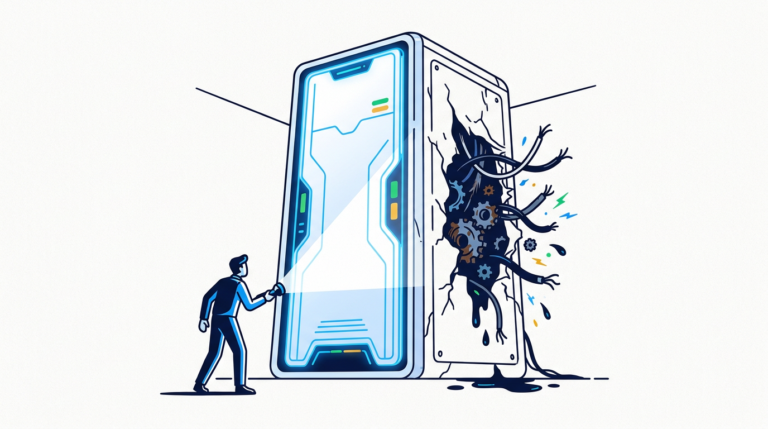
Limitations of Generative AI: The Awkward Truth of What’s Wrong
Generative AI’s primary limitations include producing factually incorrect information (hallucinations), inheriting biases from its training data, and posing…
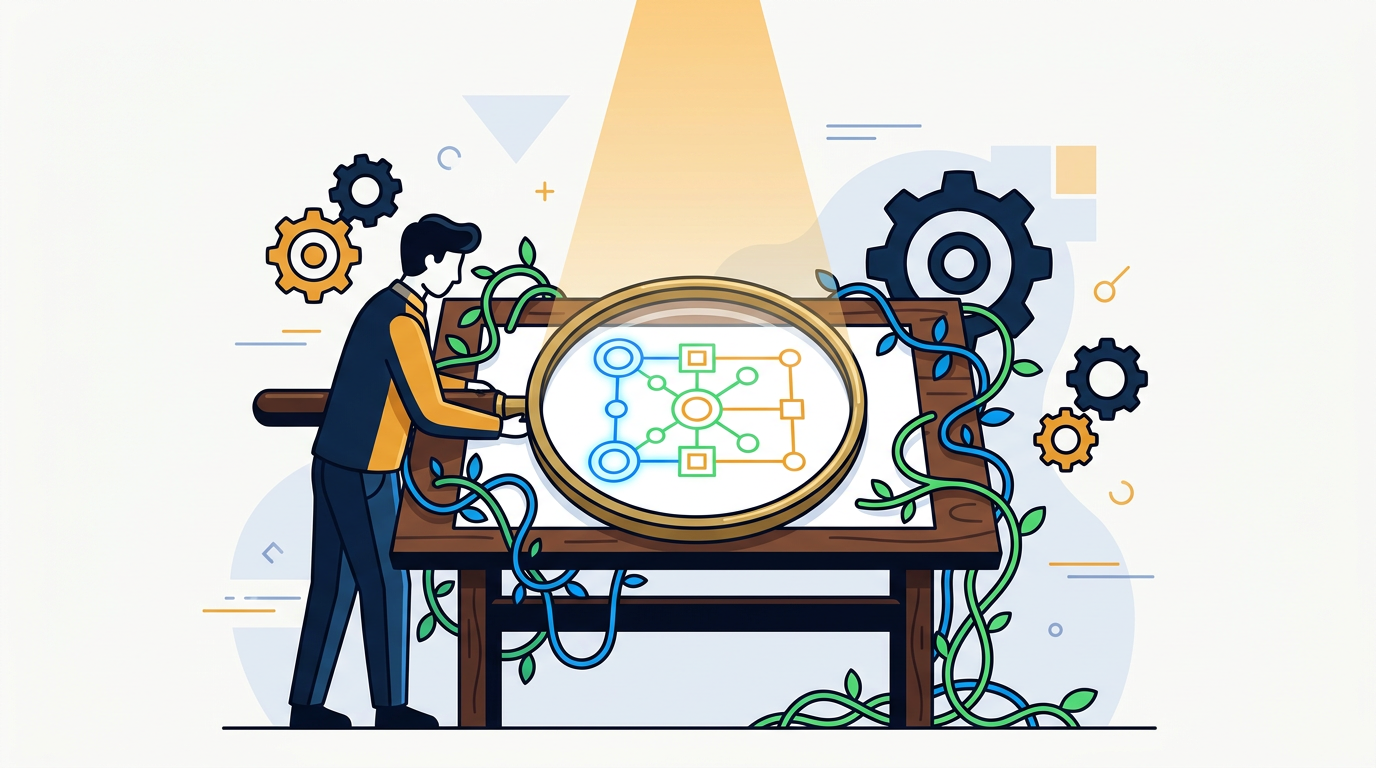
Yes, AI can be creative, within limits. Tools like ChatGPT and Midjourney generate genuinely novel images, music, and text, but they remix patterns from human work rather than feel inspiration. The interesting question is not can AI create, but what happens to human creativity when it does. This guide explores both.
In 2022, a video game designer named Jason Allen submitted a piece of art to the Colorado State Fair’s digital art competition. His work, “Théâtre D’opéra Spatial,” was a stunning, baroque scene of women in a grand hall, gazing through a massive circular window at a sun-drenched landscape. It was ethereal, detailed, and beautifully composed. It also won first prize.
And then the internet found out he’d used a creative AI tool called Midjourney to make it. The argument that followed was loud, messy, and perfectly captured our global anxiety about AI and creativity. Was it art? Did he cheat? If a machine can win an art contest, what does that mean for human artists?
This isn’t just a niche debate for artists. It’s a question for anyone who makes things, has ideas, or enjoys culture. The rise of creative AI is one of the most significant shifts in technology, and understanding it means cutting through the hype to see what’s real.
The backlash against Jason Allen was immediate. Artists accused him of taking a shortcut, of cheating the system. He argued back that he’d spent over 80 hours crafting the perfect prompt—the text instruction given to the AI—and refining the image. He was an artist, he said, and the AI was his brush.
This single event became a flashpoint for the entire AI and creativity debate. It pitted traditional skills against a new kind of technological leverage. On one side, you have the argument that art requires human effort, intention, and a lifetime of practice. On the other, you have the view that tools evolve, and an artist’s vision is what matters, not the specific tool they use.
The camera faced a similar outcry when it first appeared. Painters worried it would make their skills obsolete. Instead, it created an entirely new art form—photography—and pushed painting in new, more abstract directions. The question is whether AI will do the same, or if this time, it’s different.
Yes, AI can produce creative work, but it isn’t creative in the way a human is. A tool like Midjourney or ChatGPT can generate a poem that has never existed or an image unlike any other, which is a form of creativity. However, it does so by recognizing and recombining patterns from a massive database of human-created work, not by having a personal experience or a sudden flash of inspiration.
Think of it this way: AI is like a brilliant student who has read every book in the library but has never fallen in love, felt loss, or seen a sunset. It knows all the words and all the rules of grammar, but it doesn’t understand the feeling behind them. Its creativity is a sophisticated act of mimicry and recombination. Human creativity, on the other hand, is born from lived experience, emotion, and intention.
So, while creative AI can generate novel outputs, it fundamentally lacks the consciousness and subjective experience that drives human art. The output is creative; the process is mathematical.
To get to the bottom of this, we have to ask what “creativity” even is. It’s a slippery word, but we can break it down.
Generative AI is exceptionally good at producing novel combinations of things it has seen before. It can create a cat in the style of Van Gogh riding a rocket to Mars. That’s new. But it’s not true originality—it’s a remix. It can’t invent the idea of a cat, or Van Gogh, or a rocket.ai lacks creativity in the human sense.So, when we talk about creativity in AI, we’re really talking about its ability to generate novel and surprising results based on our instructions. The soul, the why, still comes from us.
You don’t need to be an engineer to get the gist of how this works. At its core, creative AI—or generative AI—is a prediction machine.
When you ask ChatGPT to write a story, it isn’t “thinking.” It’s making a series of incredibly complex statistical guesses. Based on the billions of sentences it was trained on from the internet, it predicts the most likely next word, and then the next, and the next.
Image generators like DALL-E and Midjourney do something similar, but with pixels. They start with a field of digital “noise” (like TV static) and, guided by your text prompt, slowly refine that noise into an image that matches the description. It’s “seen” millions of images of cats and millions of images of astronauts, so when you ask for a “cat astronaut,” it knows how to blend those patterns together.
The training data is the key. These models are trained on vast swathes of the internet—text, images, music, code. This is also where the biggest ethical and legal headaches begin, because much of that data is protected by copyright. The AI is learning from human culture, which means its creativity is a direct reflection of our own.
The big fear is replacement. Will writers, designers, and musicians be out of a job? The honest answer is no, but their jobs will absolutely change.
History shows that technology is more often an agent of augmentation than of replacement. The synthesizer didn’t replace musicians; it created new genres of music and gave artists new tools. Photoshop didn’t replace illustrators; it changed their workflow forever.
AI is a tool. A very powerful, very strange tool, but a tool nonetheless. It can accelerate workflows, automate tedious tasks, and break creative blocks. But it can’t have a point of view. It can’t decide a project needs a different emotional tone. It can’t build a relationship with a client.
The future of ai and human creativity is not a battle between man and machine. It’s about collaboration. The creative professionals who thrive will be the ones who learn to direct AI, using it to amplify their own vision and talent. If you’re looking to integrate these tools into your own business or creative process, understanding this collaborative framework is the first step.
Thinking of AI as a single thing is a mistake. It’s more helpful to see it as a partner that can play different roles depending on what you need. This is the spectrum of creative collaboration:
idea generation. You’re stuck, so you turn to the AI. “Give me ten plot ideas for a mystery novel set in Antarctica.” “Suggest five color palettes for a calming yoga app.” “Write a headline for an ad about coffee.” The AI provides the spark, you provide the fire.task automation and grunt work. It’s about offloading the boring parts of creativity. “Remove the background from these 50 product photos.” “Summarize this long research paper.” “Generate some placeholder text for this website mockup.” This frees up the human to focus on the high-level strategic and creative decisions.Most creative work in the near future will involve a mix of all three. The artist becomes a director, a curator, and an editor, guiding the powerful but mindless AI to achieve a specific vision.
The impact of creative AI is already being felt everywhere, forcing entire industries to adapt. The creative industries that rely on producing high volumes of content are feeling it first and fastest.
The film industry is a major battleground. The 2023 Hollywood strikes by the Writers Guild of America (WGA) and SAG-AFTRA were partly fueled by fears that studios would use AI to write scripts or create digital replicas of actors without fair compensation. The resulting agreements put up some guardrails, but the technology is here to stay.
In the music industry, AI can compose royalty-free background music, create new sounds, or even mimic the voice of a famous singer (with all the ethical problems that entails). For independent artists and content creators, these tools can level the playing field, giving them access to production quality that was once reserved for major studios.
The conversation often stops at Hollywood and Spotify, but the changes run much deeper.
economic impact here is massive. AI can generate textures for 3D models, concept art for characters and environments, and even simple code snippets, dramatically speeding up development cycles.In all these fields, the pattern is the same: AI handles the breadth (generating many options quickly), while the human provides the depth (choosing the best option, refining it, and adding the final polish).
This is where things get really messy. The legal and ethical frameworks for AI are years behind the technology, creating a chaotic “wild west” environment.
The biggest issue is copyright. Generative AI models are trained on billions of images and texts scraped from the internet, much of it copyrighted work from human artists. Is this “fair use,” as the AI companies claim, or is it mass copyright infringement? Lawsuits are piling up, and the outcome will shape the future of both AI and intellectual property law.
Then there’s the question of ownership. Who owns AI-generated art?
prompt?Currently, the U.S. Copyright Office has taken the stance that a work created solely by an AI, without significant human authorship, cannot be copyrighted. If you just type “a beautiful painting” and take the first result, you likely own nothing. But if you spend hours refining it, editing it in Photoshop, and combining it with other work, you might have a claim. This area of policy and regulation is evolving fast.
Talk of job displacement is everywhere. While AI won’t cause a creative apocalypse, some jobs are definitely at risk, while new ones are being born.
Roles at Risk: The most vulnerable jobs are those that involve repetitive, commoditized creative tasks. Think of someone who churns out hundreds of simple graphics for social media, writes basic product descriptions, or creates generic stock photography. AI can now do this faster, cheaper, and at a massive scale.
Emerging Roles: For every role that is diminished, new ones appear.
copyright, and misuse.The job impact isn’t about elimination; it’s about elevation. AI will automate the lower-value creative tasks, forcing humans to move up the value chain to focus on strategy, taste, and original ideas.
We can’t have an honest conversation about creative AI without looking at its potential for harm.
The most obvious danger is deepfakes—hyper-realistic but fake videos or images. The potential for misinformation, propaganda, and personal harassment is enormous. As the technology gets better, our ability to trust what we see and hear online will erode.
There’s also the issue of creative spam. The internet is already being flooded with low-quality, AI-generated articles, e-books, and images, making it harder to find authentic, human-made content.
Finally, there’s a more philosophical question: What happens to the artistic value of human skill? If anyone can prompt an AI to create a “masterpiece” in 30 seconds, does that devalue the work of a painter who spent a decade honing their craft? Some argue it will make authentic, human-made art even more valuable, like a handcrafted table in a world of IKEA furniture. The “Made by Human” label may become a mark of luxury and prestige.
No, not in the way we are. AI is a tool of immense power, a funhouse mirror that reflects our own collective creativity back at us in new and startling ways. It has no soul, no intent, and no lived experience. Its “creativity” is a mathematical illusion.
But the output is undeniably creative. And that’s the paradox.
The question “Can AI be creative?” is a distraction. The real question is, “How will we use this new form of synthetic creativity?” It can be used to generate endless spam and deepfake propaganda. Or it can be used to cure creative block, democratize artistic tools, and push human artists to explore new frontiers of expression.
AI isn’t the artist. You are. The AI is your new, very strange, and very powerful paintbrush. The challenge now is to learn how to paint with it.
Will AI replace human artists?
No, but it will change their jobs significantly. AI is best understood as an augmentation tool that automates tedious tasks and helps with idea generation. This shifts the artist’s role from pure craft to one of direction, curation, and vision. The human will still be the one with the ideas and the taste.
Who owns AI-generated art?
This is a legal gray area that is still being decided in courts and by regulators. In the United States, the current guidance from the Copyright Office is that work generated by AI without significant human authorship cannot be copyrighted. Ownership often depends on the terms of service of the AI tool and the degree of human creative input.
What are the best creative AI tools?
The landscape changes fast, but a few leaders have emerged. For text generation, OpenAI’s ChatGPT is the most versatile. For image generation, Midjourney is favored by artists for its stylistic and high-quality output, while DALL-E 3 is known for its ease of use and ability to follow complex prompts.

Part of the Thinker's Automation Labs content team. Researches with the SEO Blog Research Agent, drafts the piece, and routes it through review before publishing. Every claim is fact-checked against primary sources.
Generative AI’s primary limitations include producing factually incorrect information (hallucinations), inheriting biases from its training data, and posing…
Generative AI for business refers to artificial intelligence systems that create new, original content—like text, images, and code—from…
Generative AI examples include tools that create original content across various formats. Common applications are text generation with…