AI in restaurants uses technologies like machine learning and automation to enhance operations and customer service. Common applications include automated ordering systems, personalized marketing, predictive inventory management, and kitchen automation, helping to improve efficiency, reduce waste, and create better guest experiences.
AI in Restaurants: What’s Real, What’s Hype, and What Actually Works
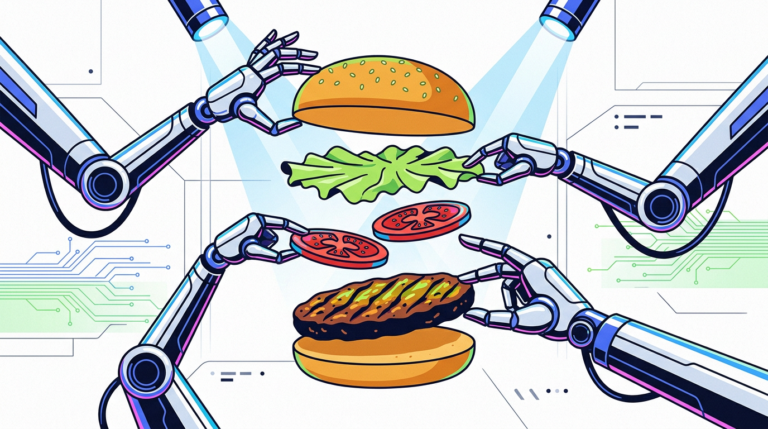
Let’s get one thing straight: the conversation about AI in restaurants is completely dominated by the wrong image. Everyone pictures a chrome-plated robot flipping burgers or a C-3PO clone taking your order. It’s a fun visual, but it’s a massive distraction from what’s actually happening.
The real impact of AI isn’t about replacing your favorite line cook with a robot. It’s about making the entire, chaotic, beautiful business of running a restaurant a little less chaotic. It’s about using smart tools to solve the industry’s oldest problems: long waits, wasted food, and guessing what your customers want.
Most of the AI that’s actually working in restaurants today is invisible. It’s software, not hardware. It’s about data, not droids. We’re going to cut through the hype, show you what’s really being used, and tell you what’s actually worth your time.
So, Is a Robot Going to Replace Your Favorite Chef?
No. At least, not anytime soon.
The narrative that AI is coming for everyone’s job is a tired one, and it completely misses the point, especially in hospitality. The real opportunity with AI isn’t about replacing humans; it’s about augmenting them. It’s about getting rid of the mind-numbing, repetitive tasks so your team can focus on what they do best: cooking great food and providing memorable service.
Think of it this way: would you rather have your best server stuck on the phone taking a complex catering order for ten minutes, or greeting guests at the door? AI can handle the phone call. Would you rather your manager spend an hour counting inventory in the walk-in freezer, or training a new hire on the floor? AI can do the counting.
This isn’t a story about job replacement. It’s a story about job redefinition. The goal is to make restaurant jobs better, more efficient, and more focused on the human element of hospitality that a machine will never be able to replicate.
What Is AI in Restaurants, Really?
When we say “AI in restaurants,” we’re not talking about a single thing. It’s an umbrella term for a set of technologies that allow software to learn from data, recognize patterns, and make predictions or recommendations. It’s the “brain” that makes restaurant automation smart.
Forget the sci-fi stuff. In the real world, AI is the system that analyzes past sales to tell you not to order so much fish before a long weekend. It’s the voice that understands a mumbled drive-thru order for “two burgers, no pickles, and a large fry.” It’s the software that looks at your schedule and your sales forecast and points out you’re going to be understaffed during Saturday’s dinner rush.
It’s less about general intelligence and more about being incredibly good at one specific, narrow task.
It’s Not Just Robots: From Narrow AI to Generative AI
To understand the landscape, you just need to know two main types of Artificial Intelligence:
-
Narrow AI (or Weak AI): This is 99% of the AI in the world today. It’s designed and trained for one specific task. The AI that recognizes your face to unlock your phone is a narrow AI. The AI that powers a drive-thru voice assistant is a narrow AI. It can’t write a poem or diagnose a disease; it can only take a food order, but it does it very, very well. This is the workhorse of the restaurant industry.
-
Generative AI: This is the new kid on the block, the technology behind tools like ChatGPT. It creates new content—text, images, code—based on the data it was trained on. In a restaurant context, it might be used to generate creative marketing emails, draft responses to customer reviews, or even suggest new menu item descriptions. It’s powerful, but its role is still emerging.
For now, when you hear about AI in restaurants, it’s almost always a form of Narrow AI doing a specific job better, faster, and more consistently than a human can.
The Main Course: 3 Ways AI is Actually Used in Restaurants
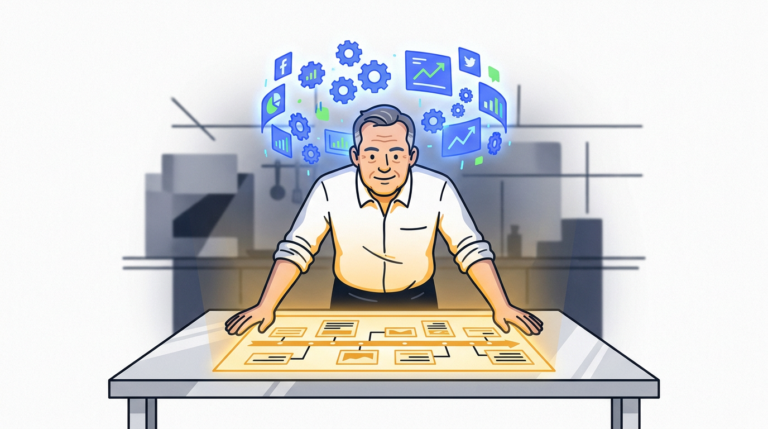
To make sense of it all, it helps to break a restaurant down into three core areas: Front-of-House (where customers are), Back-of-House (the kitchen and operations), and Headquarters (the business management side). AI has a distinct role to play in each.
The ‘FOH-BOH-HQ’ AI Framework
Think of your restaurant as having three interconnected zones. AI doesn’t just live in one; it works across all of them to connect the dots.
- FOH (Front-of-House): All about the guest. AI here focuses on ordering, personalization, and service.
- BOH (Back-of-House): All about the food. AI here focuses on kitchen efficiency, inventory, and waste reduction.
- HQ (Headquarters): All about the business. AI here focuses on analytics, forecasting, and strategy.
Let’s look at what’s happening in each area.
1. Front-of-House (FOH): Enhancing the Customer Experience
This is where AI directly touches your guests. The goal is to make ordering easier and the experience more personal.
- Voice AI for Ordering: This is the big one, especially in fast food. AI-powered voice ordering systems are taking orders at the drive-thru and over the phone. They don’t get flustered, they never forget to upsell, and they understand complex orders with surprising accuracy. This frees up staff to focus on payment and fulfillment, speeding up the whole line.
- Self-Service Kiosks: Kiosks aren’t new, but the AI inside them is getting smarter. Modern kiosks use data to offer personalized recommendations and upsells based on a customer’s current order or past history. They consistently lead to higher average check sizes.
- Personalized Marketing: AI analyzes customer data (ordering history, frequency, time of day) to send hyper-targeted offers. Instead of a generic “20% off” blast, a customer might get an offer for their favorite sandwich on a day they usually order, dramatically increasing the chance they’ll redeem it and build customer loyalty.
- Chatbots and Virtual Assistants: On your website or app, a chatbot can answer common questions (“Are you open on holidays?”), book reservations, and even take initial catering inquiries, 24/7.
2. Back-of-House (BOH): Improving Operational Efficiency
This is the engine room of the restaurant, and AI is becoming a critical tool for optimization.
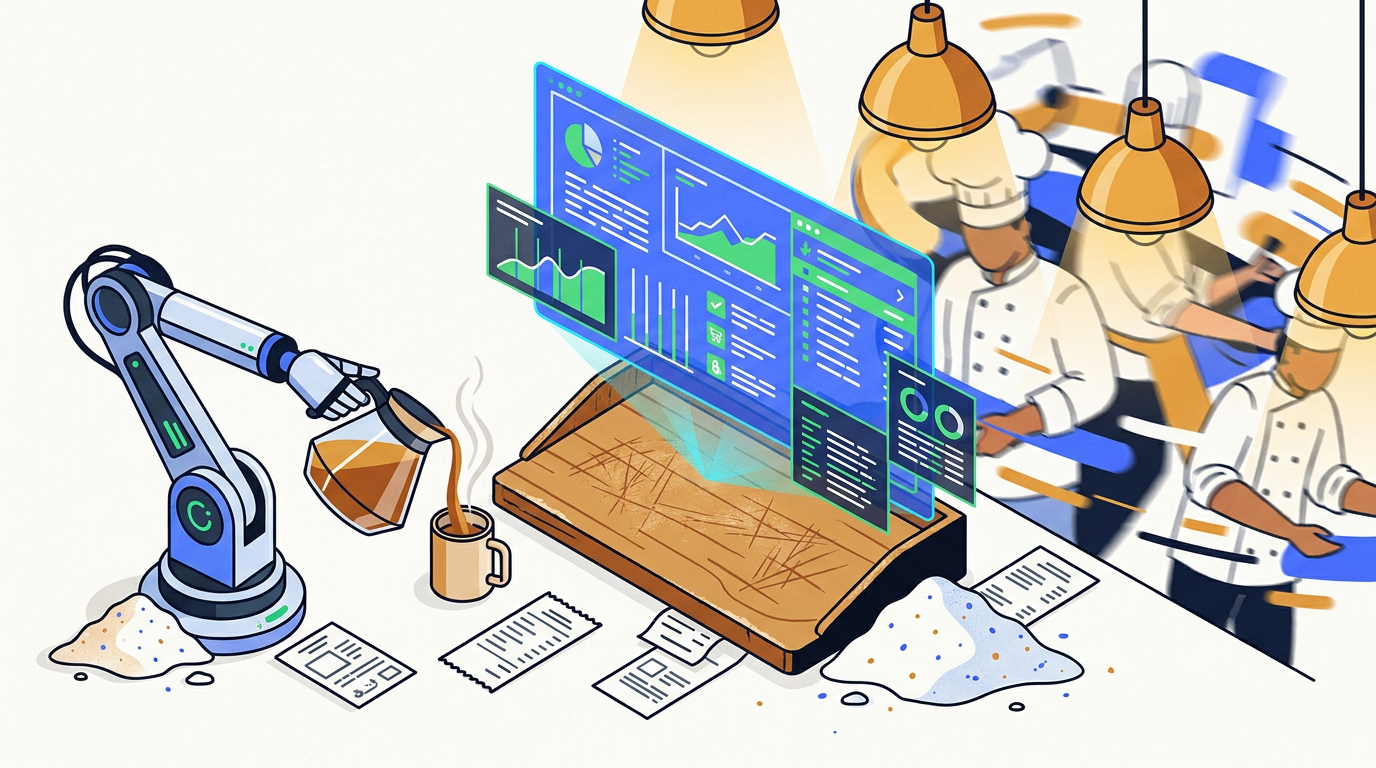
- Predictive Inventory Management: This is arguably the most valuable use of AI in restaurants. Instead of guessing, AI systems analyze historical sales data, weather forecasts, local events, and seasonality to predict exactly how much of each ingredient you’ll need. The result is a massive reduction in food waste and smarter purchasing that directly impacts your bottom line.
- Kitchen Automation Systems: Here come the robots—sort of. Systems like Miso Robotics’ “Flippy” use computer vision and robotic arms to handle repetitive, high-volume tasks like operating a deep fryer. This doesn’t replace a chef; it acts as a tireless kitchen assistant, ensuring consistency and freeing up cooks for more complex tasks like plating and quality control.
- Quality and Consistency Monitoring: Using computer vision (AI that can “see”), cameras can monitor the food production line. Is every pizza the same size? Did that burger get two pickles? This tech helps large chains enforce brand standards and ensures every customer gets the same experience, every time.
3. Headquarters (HQ): Smarter Business Decisions
For multi-location groups and enterprise chains, AI provides the high-level insights needed to run the business intelligently.
- Sales and Demand Forecasting: Beyond just inventory, AI predicts future sales with incredible accuracy. This informs everything from staff scheduling (avoiding over-or-under-staffing) to marketing promotions.
- Menu Engineering and Pricing Optimization: AI can analyze the profitability and popularity of every single item on your menu. It can identify “hidden gem” items that should be promoted, or suggest small price adjustments on popular items that could significantly boost revenue without hurting demand.
- Labor Optimization: By connecting sales forecasts with employee data, AI helps create the perfect staff schedule. It ensures you have enough people on the floor for a rush and aren’t wasting labor costs during slow periods, all while navigating complex local labor laws.
Who’s Actually Doing This? Real-World Examples and Vendors ⭐
This isn’t just theory. Major brands and innovative startups are implementing this technology right now. Here are a few key players that show what’s possible.
The AI Drive-Thru: Presto & Hi Auto
If you’ve been to a drive-thru recently, there’s a decent chance you’ve already spoken to an AI. Companies like Presto and Hi Auto are leaders in voice AI for QSRs (Quick Service Restaurants).
- What they do: Their software integrates with the existing headset and speaker system. When a car pulls up, the AI greets the customer, takes their order, reads it back for confirmation, and sends it directly to the kitchen display system.
- Who it’s for: Primarily high-volume drive-thru chains like Checkers, Del Taco, and Hardee’s.
- The Standout: The biggest win here is order accuracy and consistency. The AI always asks about upsells (like adding a drink or upgrading to a large fry), which directly increases the average check size. It also frees up an employee who would otherwise be tied to a headset, allowing them to expedite orders and improve speed of service.
Kitchen Automation: Miso Robotics’ Flippy
Miso Robotics captured headlines with its burger-flipping robot, but the real product is much more practical.
- What it does: “Flippy” is a commercial kitchen robot arm that operates fry stations. Using computer vision, it identifies different frozen products (fries, onion rings, chicken tenders), knows the correct cook time for each, and operates the fryer baskets.
- Who it’s for: Fast food and casual dining chains with a heavy fried-food menu, like White Castle and Jack in the Box.
- The Standout: This is a perfect example of augmenting staff, not replacing them. The fry station is one of the hottest, most dangerous, and highest-turnover positions in a kitchen. Flippy takes on the repetitive, greasy work, improving safety and allowing kitchen staff to focus on assembly and quality control. It’s about creating a better working environment.
Toast is a dominant player in the restaurant POS (Point of Sale) space, and they are building AI directly into their ecosystem.
- What it does: Toast AI isn’t a single product, but a suite of AI-powered features built on the mountain of data that flows through their system. This includes sales forecasting, personalized email marketing tools that pull from customer data, and menu optimization insights.
- Who it’s for: Any restaurant using the Toast platform, from single-location cafes to small chains.
- The Standout: The power of Toast AI is its integration. Because the AI is connected directly to the source—the POS where every sale happens—its insights are incredibly accurate and actionable. A restaurant manager can see a forecast and adjust their ingredient order or staff schedule right within the same system. This is the future: AI that’s embedded, not bolted on.
How does AI improve restaurant efficiency?
AI improves restaurant efficiency primarily through automation and data-driven optimization. It automates repetitive tasks like taking orders or scheduling staff, freeing up human workers for higher-value activities. It also analyzes data to optimize inventory, reduce food waste, predict customer demand, and streamline kitchen workflows for faster service.
What are the best examples of AI in fast food?
The best examples of AI in fast food are AI-powered drive-thru voice assistants, predictive inventory management, and kitchen automation. Voice assistants from companies like Presto improve order speed and accuracy. Predictive analytics helps chains forecast demand to reduce waste. Kitchen automation, like Miso Robotics’ Flippy, handles repetitive tasks like frying, ensuring consistency and improving staff safety.
Will AI replace restaurant workers?
No, AI is not expected to replace restaurant workers wholesale. Instead, it will augment them and change the nature of their jobs. AI will handle repetitive, data-heavy, or physically strenuous tasks—like taking inventory, processing drive-thru orders, or working a deep fryer. This frees up human staff to focus on more complex, creative, and customer-facing roles that require empathy, problem-solving, and hospitality—skills AI cannot replicate. The focus is on making human jobs better, not eliminating them.
The Bottom Line: Real ROI and Cost Savings from AI ⭐
This all sounds great, but does it actually save money? Yes. The return on investment (ROI) is real, and it comes from several places:
- Increased Revenue: AI-driven upsells are incredibly effective. Drive-thru voice AI can increase average check size by 5-10% simply by never forgetting to ask “Would you like to make that a large?” Personalization platforms can boost repeat visits and customer lifetime value.
- Reduced Food Costs: This is the big one. Predictive inventory management can reduce food waste by 25-40%. For a business with razor-thin margins, that’s a massive impact, dropping straight to the bottom line.
- Lower Labor Costs: AI-driven scheduling can reduce labor costs by 2-5% by eliminating unnecessary over-staffing. More importantly, automation reduces the need for staff to perform the most undesirable tasks, which can lower employee turnover—a huge hidden cost in the industry. For example, some QSRs using Miso Robotics’ Flippy have reported significant drops in turnover for kitchen positions.
- Improved Throughput: In a drive-thru, speed is everything. By automating the order-taking process, chains have been able to shave 20-30 seconds off their average service time, allowing them to serve more cars per hour.
A tool is not a strategy, but when applied to a clear problem like waste or speed, AI provides a measurable return.
Does This Work for a Single Location? Scaling AI for Chains vs. Independents ⭐
The adoption of AI in restaurants isn’t one-size-fits-all. What works for McDonald’s won’t work for your local bistro.
- For Large Chains (QSRs, Fast Casual): This is where the most aggressive adoption is happening. Chains have the volume to justify big investments in things like drive-thru AI and kitchen robotics. They also have standardized menus and operations, which makes implementing AI easier. Their main focus is on consistency, speed, and marginal gains at massive scale.
- For Independent Restaurants & Small Groups: The barrier to entry is getting lower. You’re not going to install a robot arm tomorrow. But you can absolutely use AI. The most accessible and impactful starting point is a modern POS system like Toast or Square that has AI features built-in. Use its sales forecasting to write smarter schedules. Use its inventory tools to track waste. Activate its email marketing to send personalized offers. For independents, the strategy isn’t about robots; it’s about using the data you already have more intelligently.
The key is to automate the right things. Most people try to automate visible busywork first. The real wins are in the invisible bottlenecks: ordering the right amount of food, building the perfect schedule, and preventing a customer from slipping away.
“But We’ve Always Done It This Way”: Training Your Team for AI ⭐
Introducing any new technology can be met with skepticism. The key to a successful rollout isn’t the software; it’s the people.
The “jobpocalypse” narrative has made many employees fearful of automation. You must frame AI as a tool that helps them, not a tool that replaces them.
Managing Resistance and Empowering Staff
- Frame it as an “Assistant”: Don’t call it “the AI.” Call it the “scheduling assistant” or the “ordering assistant.” Language matters. It’s a tool to help them do their job better. The voice AI isn’t taking their job; it’s taking the annoying part of their job so they can focus on making customers happy at the window.
- Focus on the “Why”: Explain the benefits that matter to them. “This new inventory system means you’ll spend less time in the cold walk-in counting boxes and more time on the floor.” Or, “This will help us prevent running out of popular items during a rush.”
- Train, Train, Train: Don’t just drop a new system in their laps. Provide clear, hands-on training. Show them how the tool makes their specific workflow easier. The real work of automation begins when you build for failure and for human use. A good system should feel like it’s working for them.
- Listen to Feedback: Your team on the ground will see things the software can’t. They’ll know if the AI’s forecast feels off or if the kiosk flow is confusing customers. Create a channel for this feedback and act on it. This makes them part of the process, not victims of it.
The Hard Part: Challenges of Bringing AI into Your Restaurant
It’s not all seamless. Implementing AI comes with significant hurdles.
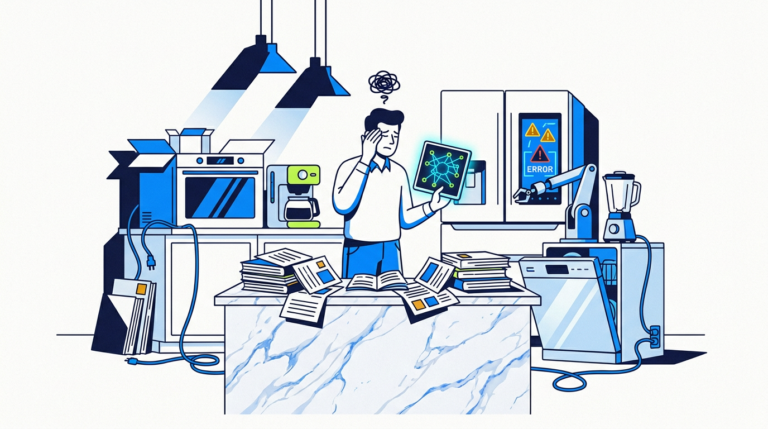
The Integration Nightmare with Legacy Systems
The biggest technical challenge is that most restaurants are running on a patchwork of old and new technology. Your POS system is from one company, your scheduling software from another, and your accounting platform from a third.
Getting a new AI tool to talk to all of these “legacy systems” can be a nightmare. A brilliant predictive ordering AI is useless if it can’t pull sales data from your 10-year-old POS. This is why integrated platforms like Toast are gaining so much ground—they solve the integration problem by owning the whole stack. For everyone else, expect to spend time and money on getting your systems to communicate.
Cost, Privacy, and Other Hurdles to Consider
- Cost: While the ROI can be strong, the upfront investment for hardware like kiosks or robots can be substantial. Software-as-a-Service (SaaS) models are more accessible, but monthly fees add up.
- Data Privacy: Using AI for personalization means collecting customer data. You must be transparent about what you’re collecting and how you’re using it, and you need to comply with regulations like GDPR and CCPA. A data breach could destroy customer trust.
- The “Black Box” Problem: Sometimes, it’s hard to know why an AI made a certain recommendation. If the AI says to order 500 lbs of chicken but your gut says that’s way too much, who do you trust? Building trust in the system takes time.
- Over-Reliance: If your internet goes down or the AI software has a bug, can your team still function? You need backup plans and manual overrides. Technology is a tool, not a prophecy you follow blindly.
What are the biggest challenges of implementing AI in a restaurant?
The biggest challenges of implementing AI in a restaurant are cost, integration with legacy systems, and staff adoption. The upfront investment for AI hardware and software can be high. New AI tools often struggle to integrate with older, existing POS and back-office systems. Finally, there’s the human challenge: training staff, overcoming resistance to change, and ensuring the team trusts and effectively uses the new technology.
The current applications are just the appetizer. Here’s what’s coming next:
- Hyper-Personalization: Imagine a kiosk that recognizes a returning customer, pulls up their “usual,” and suggests a new menu item based on their past preferences, all before they even touch the screen. This level of dynamic, one-to-one marketing is the holy grail.
- Truly Autonomous Kitchens: We’re a long way off, but companies are working on fully automated kitchen stations that can prepare more complex meals from start to finish. This will likely appear first in “ghost kitchens” that only handle delivery orders.
- Dynamic Pricing: Like airlines and hotels, restaurants will use AI to adjust prices in real-time based on demand, time of day, or even weather. A hot day might see a slight increase in the price of milkshakes. A slow Tuesday afternoon might trigger a discount on appetizers.
- AI-Powered Sustainability: AI will go beyond just reducing waste. It will help restaurants source more sustainable ingredients, optimize energy consumption in the kitchen, and provide customers with detailed information about the carbon footprint of their meal.
Our Take: What’s Real, What’s Hype, and What You Should Actually Do
The world of AI in restaurants is noisy. Here’s our honest breakdown.
What’s Hype: Fully autonomous robot chefs taking over kitchens. Sentient AI that can “create” a new menu from scratch. We are years, if not decades, away from this being a practical reality. Ignore it.
What’s Real and Working Now:
- AI Voice for Ordering (Drive-thru/Phone): For any high-volume QSR, this is a no-brainer. The ROI is fast and clear.
- Predictive Inventory & Sales Forecasting: This is the single most valuable AI application for almost any restaurant, from a single cafe to a global chain. Reducing food waste is pure profit.
- Integrated POS/AI Platforms: Systems like Toast AI are the most logical entry point for small-to-medium-sized businesses. They connect the data to the action.
What You Should Actually Do:
- If you’re a single-location restaurant or small group: Don’t worry about robots. Focus on data. Your first step is getting a modern, cloud-based POS system. Use the built-in analytics. Start tracking your food waste religiously. Experiment with the system’s marketing tools. Prove one workflow—like smarter scheduling or a targeted email campaign—before you think about anything else.
- If you’re a multi-location chain or QSR: You need to be actively piloting something. Start with the biggest pain point. Is it drive-thru speed? Look at Presto or Hi Auto. Is it labor turnover at the fry station? Talk to Miso Robotics. Is it food cost consistency across locations? Invest in a serious predictive analytics platform. The key is to start with a specific, measurable problem.
The real AI revolution in services isn’t about a single silver bullet. It’s about applying smart, narrow automation to the thousands of small, interconnected processes that make a restaurant run. Start there.
FAQ
What is the role of computer vision in restaurant AI?
Computer vision acts as the “eyes” for AI systems. In the kitchen, it monitors food preparation for consistency and safety. At the drive-thru, it can identify license plates to recognize repeat customers. It can also be used for security and to analyze customer flow within the restaurant.
How does AI help with restaurant marketing?
AI analyzes customer data from your POS and loyalty programs to understand purchasing habits. It then enables personalized marketing campaigns, sending targeted offers and recommendations via email or push notifications that are far more effective than generic promotions.
Is AI only for large fast-food chains?
No. While large chains are the most visible adopters of technologies like kitchen robotics and drive-thru AI, the principles are scalable. Smaller restaurants can access powerful AI through modern POS systems like Toast and Square, which offer built-in tools for sales forecasting, inventory management, and email marketing.
What are the ethical considerations of using AI in restaurants?
The main ethical concerns are data privacy and the impact on employment. Restaurants must be transparent with customers about how their data is collected and used. For employees, the focus should be on using AI to augment and improve their jobs, providing training and new opportunities rather than simply cutting positions.
Thinker’s Automation Labs AI Author
Part of the Thinker's Automation Labs content team. Researches with the SEO Blog Research Agent, drafts the piece, and routes it through review before publishing. Every claim is fact-checked against primary sources.