
AI Workflow Automation: A Complete Guide for Business (2024)
AI workflow automation uses artificial intelligence to manage and execute complex, multi-step business processes. It goes beyond simple…
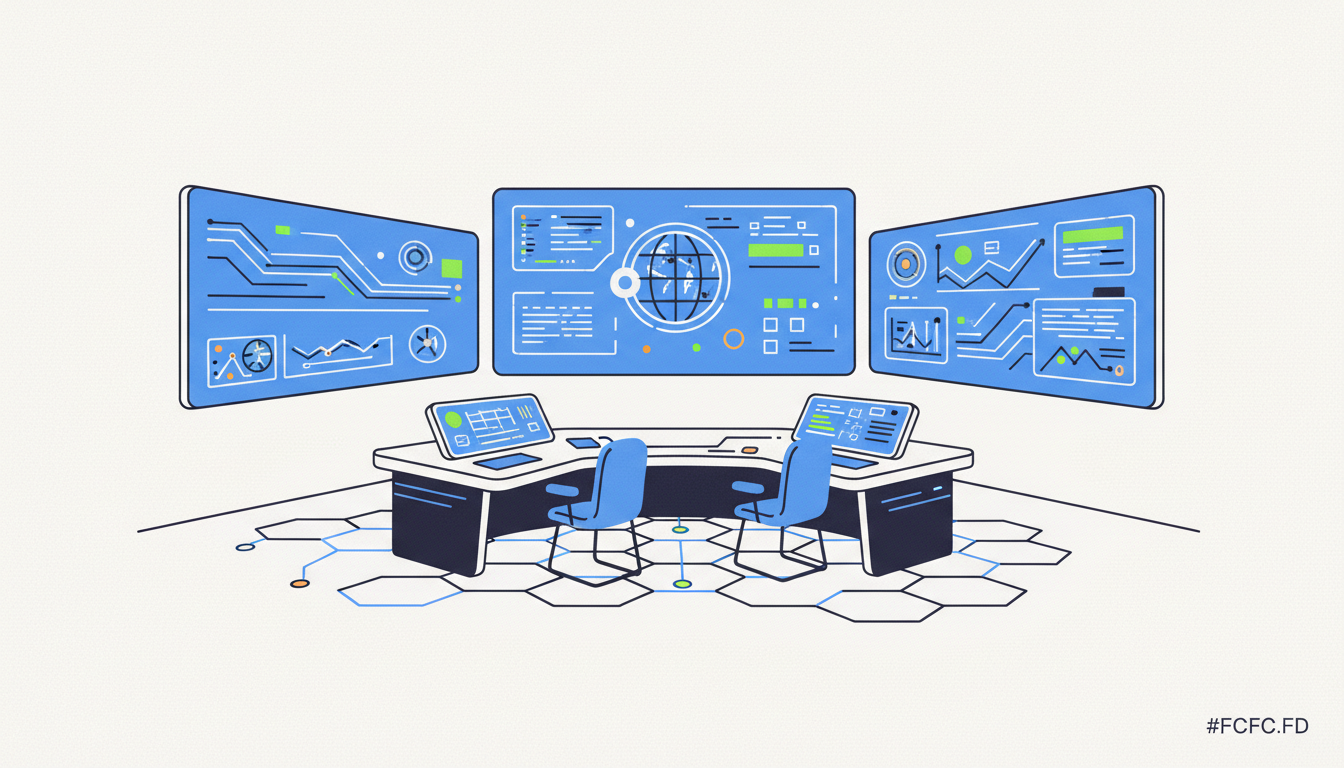
The combination of AI and RPA, known as intelligent automation, enhances rule-based bots with artificial intelligence. This allows software to handle unstructured data, make decisions, and automate complex, end-to-end business processes that previously required human judgment, moving beyond simple task automation. This guide explains how it works and ranks the best tools.
Many people use the terms “RPA” and “AI” interchangeably, but they are fundamentally different. Understanding this distinction is the first step to unlocking the true potential of automation for your business. Robotic Process Automation (RPA) on its own is useful but limited; AI on its own is powerful but abstract.
The real magic happens when you combine them into what is called Intelligent Automation (IA). It’s the difference between a bot that can only copy-paste data between perfectly formatted spreadsheets and one that can read a messy PDF invoice, understand its content, and decide what to do next.
This guide is your honest, no-fluff explanation. We’ll cover what intelligent automation actually is, how it works, and which tools are worth your time and investment.
The core difference between RPA and AI is that RPA does and AI thinks. RPA bots are digital workers that follow explicit, rule-based instructions to mimic human actions like clicking, typing, and moving files. In contrast, AI simulates human intelligence to interpret data, recognize patterns, and make judgments.
Think of it this way:
Robotic Process Automation (RPA) is the diligent, rule-following intern. You tell it, “Open this spreadsheet, copy the value from cell C5, and paste it into this field in our accounting software.” It will perform that task perfectly thousands of times without error or fatigue. However, if the value moves to cell D5, the bot will fail. It cannot adapt because it only follows the rules you gave it; it has no understanding of context.
Artificial Intelligence (AI) is the brain of the operation. It doesn’t perform the task itself but provides the judgment needed to handle variation. You can show an AI thousands of different invoices, and it will learn to identify the “Total Amount Due” regardless of its location on the page. It uses technologies like machine learning and natural language processing to understand unstructured information—the messy data of the real world.
RPA is about automating structured, repetitive tasks. AI is about simulating cognitive functions. While both are powerful on their own, their combination is transformative.
Intelligent automation (IA) is the fusion of Robotic Process Automation (RPA) and artificial intelligence (AI) technologies. It elevates rule-based bots by embedding AI capabilities like machine learning and language processing. This allows them to automate more complex, end-to-end business processes that require judgment and cognition.
Intelligent automation, sometimes called hyperautomation in a broader context, is simply RPA with a brain. Instead of just mindlessly following a script, an intelligent automation system can perform advanced functions.
An IA system can:
Essentially, intelligent automation bridges the gap between simple task automation and true business process automation. It lets you build a complete workflow that can handle the unpredictable nature of real business operations from start to finish.
Let’s revisit our intern analogy. Imagine you need to process 1,000 vendor invoices that arrive as PDF attachments in emails. This is how the combination of AI and RPA creates a seamless process.
The AI “Brain” Reads: The process begins when an email arrives. An AI model, specifically an IDP tool often powered by machine learning, scans the email and opens the attached PDF invoice. The AI has been trained to recognize patterns and identify key data points like “Invoice Number,” “Due Date,” and “Total Amount,” no matter the layout. Modern tools even use powerful LLMs for stunning accuracy.
The AI “Brain” Structures the Data: The AI extracts this messy, unstructured information from the document. It then organizes it into clean, structured data, effectively filling out a digital form automatically.
The RPA “Hands” Act: The AI passes this structured data to the RPA bot. Now the bot has the simple, predictable inputs it needs to function. It logs into the accounting software, navigates to the “Enter New Bill” screen, and pastes the invoice number, date, and amount into the correct fields, just as programmed.
Orchestration Manages the Flow: A central platform, known as an orchestrator, manages this entire workflow. It ensures the AI component hands off data smoothly to the RPA component and logs the entire process for auditing and monitoring. Orchestration is crucial for managing fleets of bots and complex, multi-step processes.
The result is a fully automated process, from receiving an email to entering a bill for payment. Human intervention is only required if the AI flags a highly unusual invoice for review. That is the power of ai and rpa working in concert.
The market for intelligent automation tools is led by a few major players. While they all offer a wide range of features, they each have distinct strengths. For most businesses looking to implement this technology, the choice is simpler than it appears.
| Tool | Best For | Why We Picked It | Downside |
|---|---|---|---|
| UiPath | Most Businesses (Our Top Pick) | The most complete and mature platform. Excellent AI features (IDP, computer vision), a huge community, and powerful orchestration. It’s the market leader for a reason. | Can be complex and expensive. It’s a professional-grade tool, not a weekend project. |
| Automation Anywhere | Large Enterprises | A strong competitor to UiPath, with a modern, cloud-native approach. Their “AARI” digital assistant is a compelling feature for human-in-the-loop workflows. | The developer experience can feel a bit less intuitive than UiPath’s. Licensing can be complex. |
| Blue Prism | Security- & Compliance-Focused Industries | Known for its robust security, governance, and audit trails. It’s a favorite in banking and finance. Bots are designed to be centrally managed and highly secure. | Considered less user-friendly and more rigid than the others. Has a steeper learning curve. |
For the vast majority of companies, UiPath is the one to beat. It has evolved from a pure-play robotic process automation company into a comprehensive intelligent automation platform. Its AI capabilities are not just a marketing gimmick; they are deeply integrated and genuinely powerful.
Here’s why we consider UiPath the best choice from the available AI tools for business:
UiPath is an enterprise-grade tool with a price tag to match, but it delivers on its promises. Implementing it can be a significant project, and many businesses partner with an AI automation agency to ensure a successful rollout and maximize their return on investment.
Theory is one thing, but where does this technology actually save time and money? Here are a few concrete examples of intelligent automation tools at work.
In every case, the pattern is the same: AI handles the unstructured data and thinking, while RPA handles the structured data entry and system navigation.
This is a critical distinction. When you hear “automation,” you might think of tools like Zapier, Make, or the open-source n8n. These are excellent “workflow automation” or “iPaaS” (Integration Platform as a Service) tools, but they are not the same as the intelligent automation platforms we’ve been discussing.
Here’s the difference:
Workflow Automation (n8n, Zapier): These tools connect modern, cloud-based applications that have APIs (Application Programming Interfaces). APIs are clean, official front doors for software to talk to other software. These tools are fantastic for tasks like, “When I get a new lead in my CRM, add them to my email list.” They are generally easier to use and much cheaper, making them a great fit for AI workflow automation between modern apps.
Intelligent Automation (UiPath, Automation Anywhere): These platforms are designed to work with any system, especially those without APIs. This includes old desktop software, legacy mainframes, and virtual desktops (Citrix). They automate work by mimicking a human user—clicking, typing, and reading the screen. This is far more complex but also more powerful for automating stubborn, real-world processes.
Our advice: If your entire workflow lives in modern cloud apps (Google Sheets, Airtable, Slack), a tool like n8n is likely a better, faster, and cheaper fit. You should only look at a true RPA and artificial intelligence platform when your processes involve desktop apps, legacy systems, virtual environments, or interpreting unstructured documents at scale.
No, RPA is not the same as AI automation. RPA is a form of automation using software bots to follow strict, pre-defined rules. AI automation is a broader category involving artificial intelligence for tasks requiring interpretation, learning, or decision-making. The combination of RPA with AI is a specific discipline known as intelligent automation.
Think of it as a spectrum. On one end is basic, rule-based RPA. On the other is advanced AI making autonomous decisions. Intelligent Automation sits in the middle, combining the strengths of both to create a system that is both reliable and smart.
For pure-play RPA, the market leaders remain UiPath, Automation Anywhere, and Blue Prism. However, most standalone RPA tasks are now better handled by simpler workflow automation tools. The real value today lies in integrated intelligent automation platforms that combine RPA with AI.
Hyperautomation is a business strategy, not a single technology. It is the concept that organizations should seek to automate every business process possible using a combination of tools. This includes intelligent automation, process mining, workflow automation, and AI. Intelligent automation is a core component of a hyperautomation strategy.
Yes. One of UiPath’s greatest strengths is its UiPath Academy, which offers a massive library of free, high-quality online courses. You can absolutely learn the fundamentals and build sophisticated automations on your own, though mastering enterprise-level features requires significant time and practice.

Part of the Thinker's Automation Labs content team. Researches with the SEO Blog Research Agent, drafts the piece, and routes it through review before publishing. Every claim is fact-checked against primary sources.
AI workflow automation uses artificial intelligence to manage and execute complex, multi-step business processes. It goes beyond simple…

Event-driven workflow orchestration is a system where a central service manages and coordinates tasks. Unlike scheduled jobs, these…
Playwright is a modern browser automation framework ideal for enterprise web scraping. It excels at reliably extracting data…