
AI Tips & Tricks: A Guide to Using AI More Effectively
To use AI effectively, focus on providing clear, specific instructions and context in your prompts. Iterate and refine…
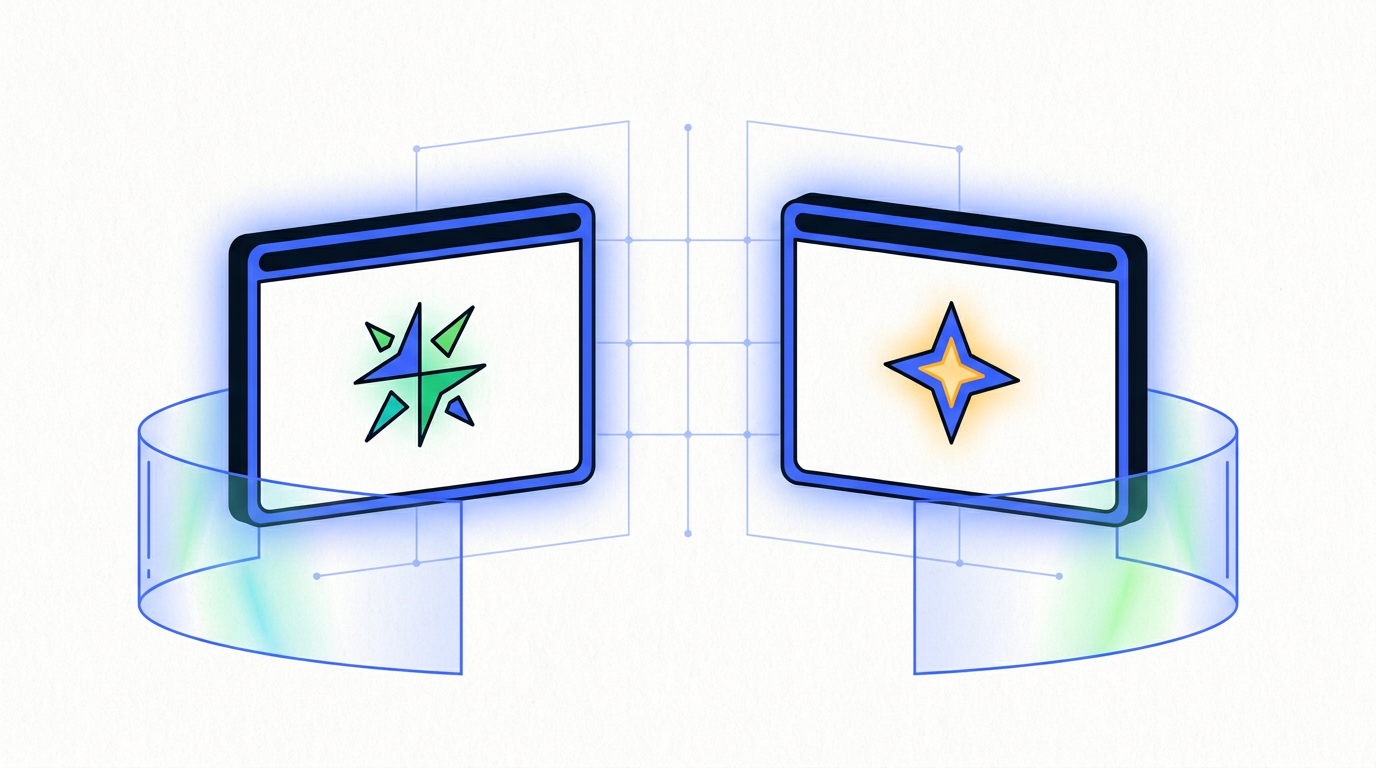
ChatGPT excels at complex reasoning and creative tasks, while Google’s Gemini leads in multimodal capabilities and real-time information access. The best choice in 2026 depends on your specific needs, whether for advanced text generation (ChatGPT) or integrated, multi-format analysis (Gemini).
The great AI chatbot debate feels a lot like the old Mac vs. PC arguments. You have two dominant players, each with a loyal following and a fundamentally different philosophy. On one side, you have OpenAI’s ChatGPT, the creative prodigy that feels like a brilliant thought partner. On the other, Google’s Gemini, the hyper-connected know-it-all, deeply woven into the world’s information.
Asking “which is better” is the wrong question. The right question is, “which is better for you?” In the chatgpt vs gemini showdown of 2026, the answer has become clearer than ever. It’s not about crowning a single king; it’s about picking the right tool for the job. And frankly, you probably only need one.
Yes, and anyone who tells you otherwise is selling something. While the AI space is crowded with new models popping up weekly, OpenAI and Google are a duopoly. They have the data, the talent, and the compute power to stay leagues ahead of the pack.
This isn’t a fleeting trend. This is the new two-party system of accessible AI. The real battle isn’t just about who has the higher benchmark score this month. It’s about two fundamentally different visions for how AI should integrate into our lives. One wants to be a specialized tool you consciously use; the other wants to be an invisible layer assisting you everywhere. Understanding that difference is the key to making a smart choice.
For those in a hurry, here’s the bottom line.
| ChatGPT (OpenAI) | Gemini (Google) | |
|---|---|---|
| Core Strength | Creative generation, complex reasoning, and coding. | Real-time information synthesis, planning, and Google ecosystem integration. |
| Best For | Writers, developers, creators, strategists. | Researchers, students, project managers, Google Workspace power-users. |
| Multimodality | Excellent, but feels like powerful add-ons (DALL-E, Voice). | Natively built for multi-format input (text, image, audio, video). |
| Integrations | Massive API ecosystem, GPTs, and Microsoft Copilot. | Deep, seamless integration with Google Search, Workspace, and Android. |
| Our Take | The best tool for creating something new from scratch. | The best tool for understanding and organizing what already exists. |
ChatGPT is the large language model (LLM) from OpenAI that essentially kicked off the public AI craze. Think of it as a brilliant, endlessly patient intern. It excels at generating human-like text, writing and debugging code, brainstorming ideas, and acting as a creative sparring partner. Its strength lies in its sophisticated reasoning and its uncanny ability to adopt different tones and styles.
It operates primarily as a destination—a blank chat window you go to with a specific task in mind.
By 2026, we’re living in the era of GPT-5.x. This isn’t just a minor update. The focus has shifted toward more reliable reasoning and the first real steps into agentic AI. This means the model can start taking multi-step actions to achieve a goal without you having to guide it every step of the way. It’s less of a chatbot and more of a junior collaborator. The quality of its creative writing and coding assistance has also taken a significant leap, making it an even more indispensable tool for professionals.
Gemini is Google’s answer to ChatGPT, but it’s a different beast entirely. Born from the combination of Google’s LaMDA and PaLM 2 models (and formerly known as Bard), Gemini was designed from the ground up to be multimodal AI. This is jargon for “it understands more than just text.” You can give it images, audio, and video, and it can reason across all of them.
Its biggest advantage is its direct line to Google’s core products. It has real-time access to the internet via Google Search and is being deeply integrated into Google Workspace (Gmail, Docs, Sheets), Android, and more. It’s designed to be an ambient assistant, helping you in the background, rather than a single destination you visit.
The latest versions of Gemini have doubled down on this integration. Gemini 3.x isn’t just in Gmail; it actively helps you manage your inbox, summarize long threads, and draft replies based on the context of your other Google apps. Its ability to plan complex tasks, like a multi-stop trip complete with bookings and itinerary suggestions pulled from Maps and Flights, is where it truly shines. It’s less about creating a novel and more about organizing your life.
No, Gemini is not universally better than ChatGPT; it’s better for specific tasks. Gemini excels at tasks requiring real-time information, planning, and deep integration with Google services like Workspace and Search. ChatGPT maintains an edge in creative writing, complex problem-solving, and sophisticated coding tasks.
The main differences are their core philosophies and strengths. ChatGPT is a powerful creation engine, best for generating novel text and code. Gemini is a synthesis engine, built to connect with live data and other services to help you find, understand, and organize information across multiple formats.
The choice between ChatGPT or Gemini often comes down to how you work.
This is where the Gemini vs ChatGPT battle gets interesting. Both are now powerful multimodal AI systems, but they took different paths.
Veo) and audio model (Lyria) feels more seamless. It’s designed to see and hear the world as you do.Image generation through DALL-E 3 is fantastic, and its voice and vision capabilities are top-notch. OpenAI’s Sora model for video generation is stunning, but it’s all part of a suite of tools, not one single, unified brain.The verdict: Gemini feels more natural for multimodal tasks. ChatGPT’s tools might be individually more powerful or creative in some cases (like DALL-E’s artistic flair), but Gemini’s integrated approach is more intuitive for everyday use.
If you follow AI news, you’re buried in AI benchmarks with names like MMLU, GSM8K, and HumanEval. These are standardized tests designed to measure an LLM’s performance on everything from grade-school math to professional-level coding.
In 2026, the story is a constant back-and-forth. One month, GPT-5.x tops the charts in reasoning. The next, Gemini 3.x posts a new record for multimodal understanding.
Here’s the honest truth: for most users, these benchmarks don’t matter. It’s like comparing the 0-60 times of two family sedans. Both are more than fast enough. The real test is how they perform on your specific tasks. Does the AI understand your intent? Does it save you time? Is the output actually useful? On that front, both are exceptional, and personal preference plays a huge role.
The model itself is just the engine. The ecosystem is the car, the roads, and the entire transportation network. This is where the long-term winner of the chatgpt vs gemini war will be decided.
API is the default choice for building AI-powered apps. This means thousands of third-party tools are built on OpenAI’s technology. Its partnership with Microsoft also puts ChatGPT’s brain inside Microsoft Copilot and the Office suite, a massive distribution channel. Its strategy is to be the foundational intelligence layer for everyone else.Google Workspace. The convenience of having your AI assistant summarize a Google Doc, draft a reply in Gmail based on that doc, and then add a meeting to your Google Calendar is an incredibly powerful moat. Its strategy is to win by being the most helpful and seamlessly integrated assistant.Both platforms use a “freemium” model. The free versions are surprisingly capable but come with limitations.
GPT-5.x, Gemini 3.x), a larger context window (meaning it can remember more of your conversation), and access to advanced tools like image generation and data analysis.Our opinion: If you use AI for more than 15 minutes a day, the paid subscription for either service is one of the highest-value purchases you can make. The jump in quality and capability from the free to the paid model is significant. Skip the daily latte and buy this instead.
This is an underrated but crucial difference.
Which is better depends on your brain. Do you prefer a quiet room to think, or a bustling library with resources at your fingertips?
While this guide is for non-engineers, it’s worth understanding the difference from a builder’s perspective, as it shapes the tools available to you. An API is basically a door that lets other software use the AI’s brain.
The takeaway for you? The vibrant OpenAI ecosystem means there’s likely a specialized third-party tool built on ChatGPT that’s perfect for your niche. The power of Google’s ecosystem is felt more directly through their own products.
This is a topic most comparisons skip, but it’s critically important. Both OpenAI and Google are pouring immense resources into making their models safer and less biased, but they face different challenges.
Both companies employ extensive content moderation, red-teaming (hiring people to try and “break” the AI), and data filtering. Neither is perfect, and both models can still “hallucinate” (make things up) or reflect biases present in their training data. Trust is the new AI frontier, and both are racing to earn it.
To understand the chatgpt vs gemini choice in 2026, you have to understand their ultimate goals.
reasoning and capability.ChatGPT is generally considered the best AI for creative writing and coding. Its models, particularly the advanced GPT-5.x versions, exhibit a stronger grasp of nuance, style, and complex logical structures, making them ideal for generating high-quality prose and debugging intricate code.
The free versions of both ChatGPT and Gemini are highly capable but have key differences. The free ChatGPT provides access to a solid base model, excellent for writing and brainstorming. The free Gemini often includes more advanced features like real-time web access and better multimodal inputs, making it superior for research and planning.
Okay, let’s cut to the chase. No more fence-sitting. You came here for a decision.
The truth is, the best tool depends entirely on what you spend your day doing. Most people don’t need both. Trying to master two different AI ecosystems is a waste of time. Pick one, learn it deeply, and integrate it into your workflow.
We think about it like this: are you primarily a Creator or a Connector?
You should make ChatGPT your go-to AI if your work involves generating something from a blank page.
It’s the superior thought partner. It’s better at brainstorming, untangling complex ideas, and iterating on a draft. If you’re a marketer writing copy, a developer writing code, a founder building a pitch deck, or an author outlining a book, ChatGPT is your tool. It’s the AI you use when the value is in the originality of the final product.
You should make Gemini your home base if your work revolves around understanding the world and organizing your actions within it.
Its superpower is its connection to the live internet and the Google ecosystem. If you’re a student researching a paper, a project manager coordinating a team with Google Workspace, or anyone planning a complex trip, Gemini is unmatched. It’s the AI you use when the value is in finding the right information quickly and turning it into an actionable plan.
Is Gemini going to replace Google Search?
Not directly. Think of it as the next evolution of search. It’s a conversational layer on top of the search index, designed to synthesize information and give you direct answers rather than just a list of links.
Do I need to learn “prompt engineering”?
No. “Prompt engineering” is just a fancy term for “giving clear instructions.” The models are getting so good that the need for tricky prompts is fading. The skill isn’t the prompt; it’s the quality of the idea behind it.
Can these tools create video and audio?
Yes. Both OpenAI (with models like Sora and its voice engine) and Google (with Veo and Lyria) have demonstrated incredible video and audio generation capabilities. By 2026, these features are becoming increasingly integrated and accessible in their flagship chatbot products.
Which AI is safer to use for private data?
Both paid business/team tiers offer stronger privacy guarantees than the free consumer versions. Neither company uses data from their business APIs to train their models. For sensitive information, always opt for a paid business plan and check the latest privacy policy.
Will I need to pay for both in the future?
Unlikely. The ecosystems are becoming so distinct and integrated that most users will find a clear favorite that aligns with their primary workflow. Choosing one and sticking with it is the most efficient path.

Part of the Thinker's Automation Labs content team. Researches with the SEO Blog Research Agent, drafts the piece, and routes it through review before publishing. Every claim is fact-checked against primary sources.
To use AI effectively, focus on providing clear, specific instructions and context in your prompts. Iterate and refine…
To choose an AI writing tool, first define your primary use case, such as creating blog posts or…

To write effective AI prompts, provide clear, specific instructions and sufficient context. Define the AI’s role, specify the…