
Restaurant Order Automation AI: A Guide to Costs & How It Works
Restaurant order automation AI uses artificial intelligence, like voice AI and natural language processing, to take customer orders…
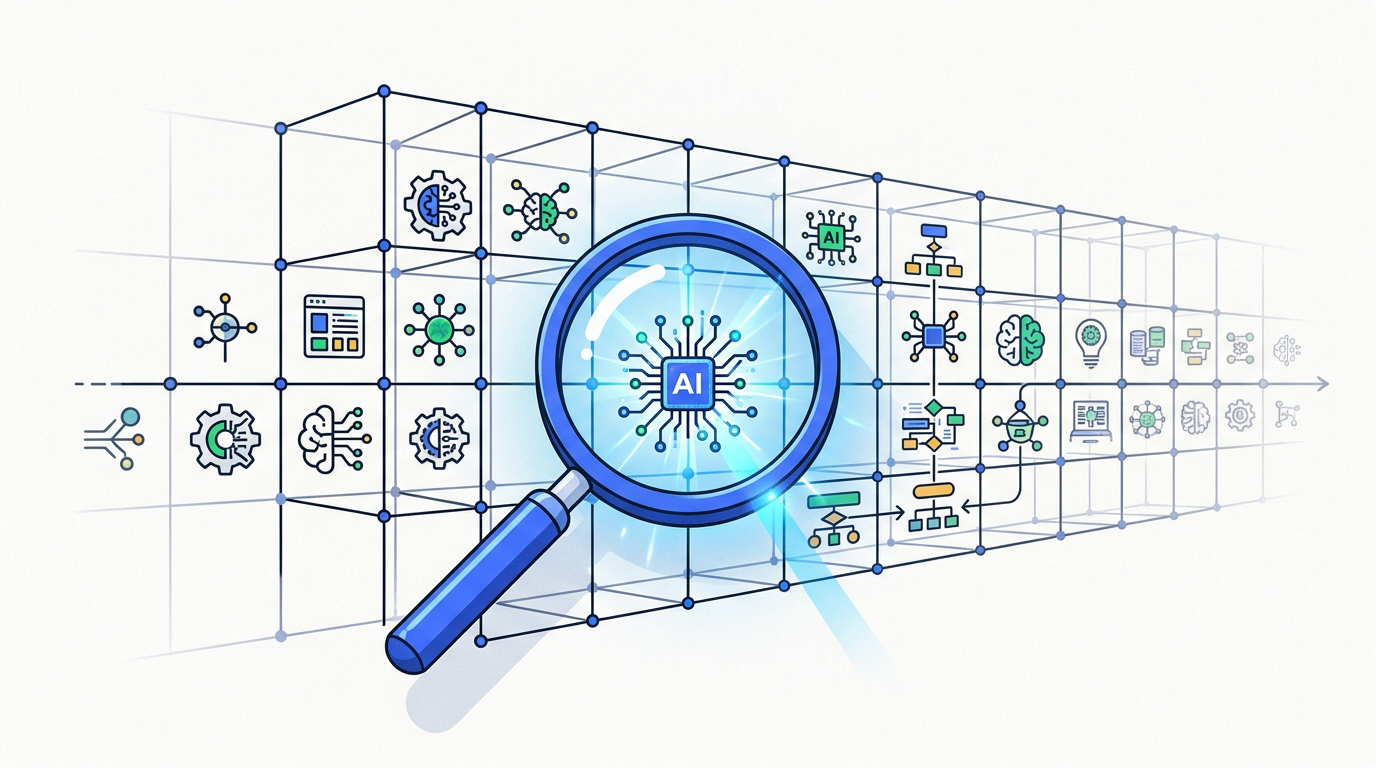
The latest AI tools released in October 2026 include new proprietary models from major labs like OpenAI and Google, several open-source updates, and various new platforms for generative AI tasks like video generation and coding assistance. Key releases focus on improving model capabilities and accessibility for developers.
Another month, another flood of AI announcements. It’s getting hard to keep up, and even harder to tell what’s a genuine step forward versus what’s just a press release with a fresh coat of paint. Most new AI tools are just wrappers on existing technology, and you don’t need ten new subscriptions. You need one or two tools you’ll actually use.
That’s our job. We waded through the hype of the latest AI tool releases this month to find the few that are actually worth your attention. We’re focusing on two major new platforms and one significant AI model update that signal where the industry is heading. Forget the noise; here’s what mattered in October 2026.
This month saw a shift away from general-purpose tools toward more specialized, professional-grade platforms. The market is maturing, and the tools are getting sharper and more focused on specific jobs.
Kinetix AI is a new browser-based generative AI platform for creating high-fidelity, commercially-ready video content. Unlike more experimental text-to-video generators, Kinetix focuses on control, consistency, and style, allowing creators to produce polished marketing videos, product demos, and social media ads.
This matters because it’s one of the first generative video tools that feels built for business, not just for creating surreal memes. The fragmentation of AI tools is a good thing; specialized tools almost always outperform generalist ones for professional work. Kinetix gives you granular control over camera angles, character consistency, and branding elements, solving the biggest headaches of using AI for video.
Who it’s for: Marketers, social media managers, and small business owners who need to create professional-looking video content without a production studio. If you’ve been frustrated by the randomness of other video generators, this is the one to try.
Pros:
Con:
The Standout Feature: The “Style Locker” lets you upload your brand’s style guide (colors, logos, fonts), and the AI ensures every video it generates adheres to it.
Compared to tools like Runway and Pika, Kinetix is less about wild creativity and more about reliable, commercial output. Think of it as the Canva of AI video generation—it’s designed to get a specific job done quickly and professionally. While OpenAI’s Sora produces more cinematic results, it lacks the fine-grained brand control that Kinetix makes central to its workflow.
DevAgent Pro is a new coding assistant from startup TuringWorks that operates as an autonomous agent within your development environment. Instead of just suggesting code snippets, it can be assigned complex tasks—like “refactor this entire module for better performance” or “find and fix all security vulnerabilities”—and will work independently to complete them, submitting a pull request for human review when finished.
This is a major step toward the kind of “agentic AI” people have been talking about. We’re finally seeing AI agents that don’t just spot problems but solve them autonomously. This shifts the developer’s role from a constant doer to a strategic overseer managing a team of digital assistants. It’s a clear sign that true automation means giving tools the agency to complete tasks end-to-end.
Who it’s for: Software development teams in small to mid-sized companies. It’s particularly useful for teams that are stretched thin and need to automate routine code maintenance, testing, and security audits. Solo developers might find it to be overkill.
Pros:
Con:
The Standout Feature: Its ability to create its own test cases to validate the code it has written before submitting it for review.
GitHub Copilot is a fantastic co-pilot, but DevAgent Pro is more like an autonomous pilot. Copilot suggests the next line of code; DevAgent Pro can write the next hundred lines, test them, and package them for you. It’s less of a pair programmer and more of a tireless junior developer you can delegate entire tasks to.
Behind all the new AI tools are the foundational AI models that power them. This month, one of the major labs released a significant upgrade that prioritizes something a lot of people have been worried about: trust.
Anthropic released Claude 4, the next generation of its large language model (LLM). The launch didn’t focus on chasing the highest benchmarks for raw performance but instead emphasized massive improvements in safety, reliability, and “Constitutional AI.” The model is designed to be much more resistant to manipulation and to explain its reasoning more clearly.
This release matters because it signals a pivot in the AI arms race. As AI models get more powerful, the biggest barrier to their adoption isn’t capability—it’s trust. Businesses need to know that the AI tools they use are safe, predictable, and aligned with their values. Claude 4 is Anthropic’s bet that the most trustworthy AI will ultimately be the most valuable.
It can do everything previous models could—write, summarize, code, analyze—but with a much lower likelihood of producing harmful, biased, or nonsensical output. It’s particularly strong at following complex, multi-step instructions and refusing to perform tasks that violate its safety constitution. For anyone looking to build reliable, customer-facing applications, this is a huge deal.
Compared to OpenAI’s GPT-4 series or Google’s Gemini, Claude 4 may score slightly lower on some creative writing or raw knowledge benchmarks. However, it significantly outperforms them on safety and instruction-following tests. If you’re writing a sci-fi script, GPT might still be your go-to. If you’re building an AI-powered customer service bot for a bank, Claude 4 is the obvious choice.
The world of proprietary models isn’t the only place seeing action. October brought a significant update in the open-source community with Meta’s release of Llama 3.5 8B. This isn’t a massive, cloud-scale model; it’s the opposite. It’s a highly optimized 8-billion-parameter model designed to run efficiently on local hardware—even high-end laptops and workstations.
This continues the powerful trend toward smaller, more accessible AI. For developers and tinkerers, this means the ability to run a capable LLM without paying API fees. The race to free AI is accelerating, and it puts powerful building blocks directly into the hands of creators. This is one of the most exciting new AI tools for October 2026 for those who like to build their own solutions.
Looking at the latest AI tools released this month, a clear picture emerges. The industry is maturing past the initial “wow” phase and entering a more practical, professional era.
Collectively, these releases show an industry getting down to business. The novelty is wearing off, and utility is taking its place.
Here’s a quick-glance table of the key AI tool releases from this month.
| Release | Category | What It Is | Best For |
|---|---|---|---|
| Kinetix AI | Product / Platform | A generative AI video platform for creating polished, brand-consistent commercial videos. | Marketers and small businesses. |
| DevAgent Pro | Product / Platform | An autonomous AI coding agent that can handle complex development tasks independently. | Software development teams. |
| Claude 4 | AI Model | A new proprietary LLM from Anthropic focused on safety, reliability, and explainability. | Businesses building trustworthy AI applications. |
| Llama 3.5 8B | Open-Source Model | A small, efficient open-source LLM from Meta designed to run on local hardware. | Developers and hobbyists. |
The most significant AI tool released this month is arguably DevAgent Pro. While new models like Claude 4 are important foundational shifts, DevAgent Pro represents a change in how we interact with AI—moving from a collaborative assistant to an autonomous agent that can be delegated complex, end-to-end tasks.
The new AI models from October 2026, like Anthropic’s Claude 4, show a strategic shift in focus. Instead of purely chasing higher performance benchmarks, they prioritize improvements in safety, reliability, and instruction-following. They are less prone to generating harmful content and better at explaining their reasoning, making them more suitable for enterprise and commercial applications than their predecessors.
Yes, the release of Meta’s Llama 3.5 8B is a significant open-source update. It’s a small but powerful model designed to run on local computers, making it accessible for developers and researchers who want to experiment with or build on top of a capable LLM without relying on paid API providers.
For businesses, this month’s AI releases signal a maturing market with more reliable and specialized tools. Models like Claude 4 offer a safer foundation for building customer-facing AI, while platforms like DevAgent Pro promise to automate complex internal workflows. For creators, tools like Kinetix AI provide more control and professionalism in generative AI, moving it from a novelty to a viable production tool.
The latest AI tool releases in October 2026 come from a mix of established industry leaders and ambitious startups. Anthropic and Meta continue to push the boundaries of proprietary and open-source AI models, respectively. Meanwhile, new startups like TuringWorks (with DevAgent Pro) and the team behind Kinetix AI are demonstrating that there is still plenty of room for innovation by building specialized platforms on top of these foundational technologies. This healthy mix of large API providers and nimble product companies drives the industry forward. You can find a more comprehensive list of new AI tools released in 2026 that we’re tracking.
Q: Do I need to upgrade to Claude 4 if I’m already using GPT-4?
A: It depends on your use case. If you prioritize safety and predictable behavior, especially for a business application, testing Claude 4 is highly recommended. For purely creative tasks where you want maximum imaginative output, you might still prefer GPT-4.
Q: Is DevAgent Pro going to replace developers?
A: No. It’s a tool designed to augment developers, not replace them. It automates tedious and repetitive tasks, freeing up human developers to focus on more strategic work like system architecture, creative problem-solving, and product strategy.
Q: Can I really run Llama 3.5 8B on my laptop?
A: If you have a modern, high-end laptop with a powerful GPU and sufficient RAM, yes. It’s designed to be much more accessible than the massive models that require dedicated cloud servers, but it still requires a reasonably powerful machine for decent performance.
Q: Is Kinetix AI free?
A: Kinetix AI offers a free tier with limited features and watermarked videos, which is great for trying it out. The paid tiers unlock higher resolution, more render time, and remove the watermark, which is necessary for any commercial use. As always, don’t pay until you’ve hit the limits of the free plan and know you need more.

Part of the Thinker's Automation Labs content team. Researches with the SEO Blog Research Agent, drafts the piece, and routes it through review before publishing. Every claim is fact-checked against primary sources.
Restaurant order automation AI uses artificial intelligence, like voice AI and natural language processing, to take customer orders…

Playwright is a browser automation library used for web scraping by controlling real browser engines like Chromium, Firefox,…
The best free AI assistant depends on your needs. For general tasks and creative writing, ChatGPT’s free tier…