
Freelance Future: Is the Gig Economy Ready for AI?
Freelancing is becoming a core part of how work gets done, not a side hustle. AI and remote…
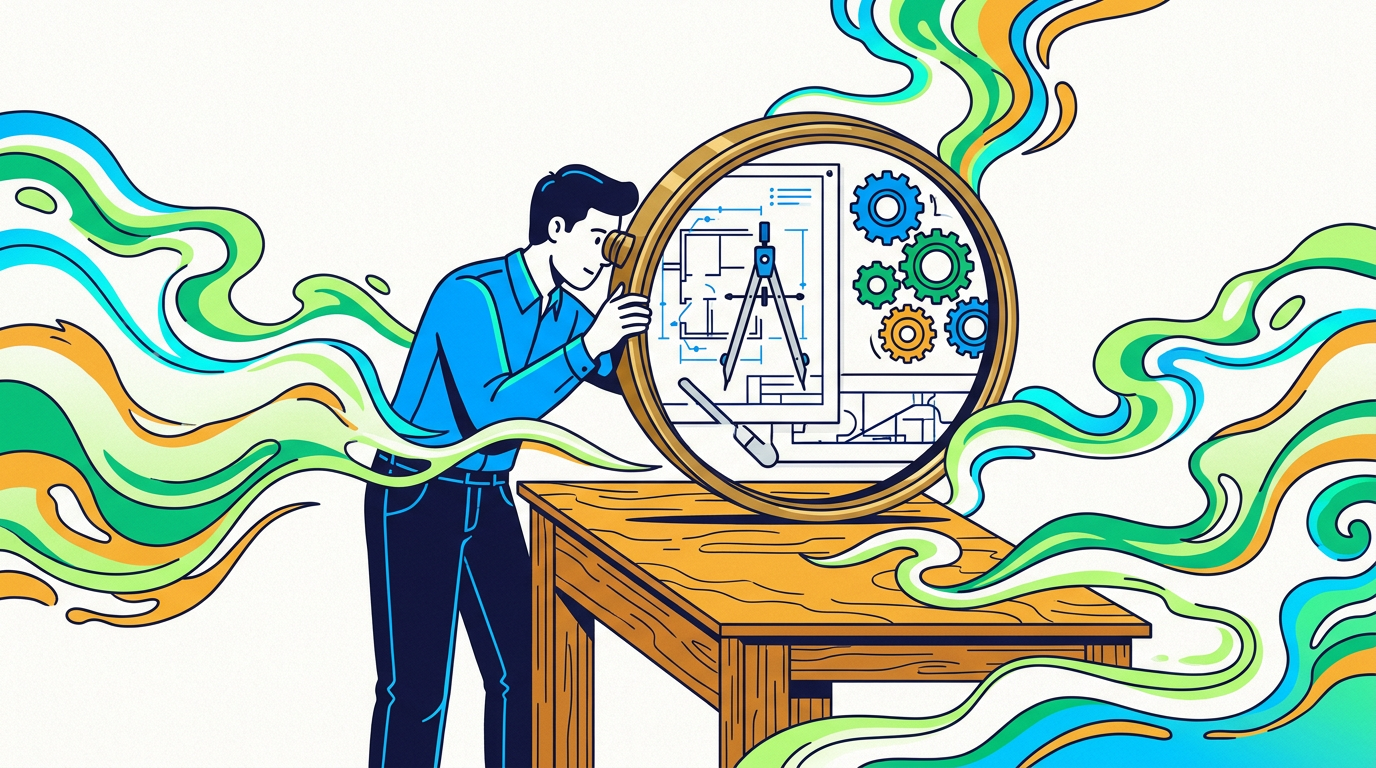
AI can’t see the future — it forecasts probabilities from patterns in past data. It’s remarkably good at short-term, data-rich predictions like demand, weather, and fraud, but it fails at novel events, and mistaking its confidence for foresight is where the real danger lies.
Everyone wants a crystal ball. We ask Siri for the weekend weather, we ask economists about the market, and we ask our friends who they think will win the big game. So it’s only natural that when we see a technology as powerful as artificial intelligence, the first thing we want to ask is, “Can you tell me what happens next?” Can an AI predict the future?
The short answer is no. Not in the way a sci-fi movie shows. But the long answer is far more interesting.
AI is the ultimate pattern-matching engine. It can analyze more data than any human ever could and spot the subtle connections—the correlations and data patterns—that lead to certain outcomes. This gives it a remarkable, almost uncanny ability to forecast. But forecasting isn’t the same as seeing the future. Understanding that difference is the key to using this technology wisely and avoiding the hype.
No, an AI cannot truly predict the future. Instead, it makes highly educated guesses—called forecasts or probabilistic forecasting—based on patterns it finds in historical data. It calculates the likelihood of a future event, but it cannot know anything with certainty and is easily fooled by events that have no precedent.
Asking “Can an AI predict the future?” is like asking if a meteorologist knows it will rain. They don’t. They analyze atmospheric data, run models based on past weather systems, and tell you there’s a 90% chance of showers. AI does the same thing, but for almost anything you can collect data on.
The real question isn’t whether AI is a psychic. It’s about understanding what kinds of futures it can and can’t forecast, and how to use that information to make better decisions.
For an AI, “prediction” is a mathematical process, not a magical one. It simply means taking a massive amount of past data as input and producing a probable outcome as output.
Think of it like a doctor giving a prognosis. By looking at your symptoms, your medical history, and data from thousands of similar patients, they can predict the likely course of an illness. They aren’t seeing your future; they’re using data analysis and pattern recognition to make a forecast.
An AI that predicts the future operates on the same principle, just at a superhuman scale. It might look at a million customer transactions to predict fraud, or analyze years of factory sensor data to predict when a machine will fail. In every case, the prediction is an echo of the past, projected forward.
AI predicts the future by using machine learning algorithms to analyze vast quantities of historical data, identify recurring patterns, and use those patterns to calculate the probability of a future outcome. It learns from the past to forecast what is most likely to happen next under similar conditions.
The process is fundamentally about learning from experience, just like a human, but with a perfect memory and near-infinite capacity. It breaks down into three basic steps:
human forecaster would miss.While “AI” is the umbrella term, several specific techniques do the heavy lifting in AI predictions. You don’t need to be an engineer to grasp the basics.
time series analysis model will predict a spike this December.neural networks are complex systems that can learn very abstract and non-obvious patterns. They are excellent for predictions where many different factors are at play, like identifying a fraudulent credit card transaction based on the time, location, amount, and purchase category. Large language models (LLMs) like GPT-4 are a very advanced type of neural network.A future predicting AI isn’t science fiction; it’s already integrated into our daily lives and businesses. It excels in areas where there is a lot of clean, historical data and the underlying patterns are relatively stable.
Here are a few concrete examples:
algorithmic predictions for short-term stock movements. These are all areas with massive, quantifiable datasets.The accuracy of AI predictions varies wildly depending on the task, the quality of the data, and the stability of the system being predicted. For narrow, data-rich tasks like fraud detection or weather forecasting, accuracy can be exceptionally high (over 95%). For complex, chaotic systems like long-term stock markets or human behavior, accuracy drops significantly.
An AI’s accuracy is not a fixed number. It’s a measure of how well its forecasts matched reality during testing. A model that is 99% accurate at identifying spam email is world-class. A model that is 60% accurate at predicting a stock’s movement is still incredibly valuable.
The key is to never take a prediction’s confidence score at face value. An AI might be “99% confident,” but that’s just a reflection of how closely the current situation matches patterns in its training data. It’s a statement about the past, not a guarantee of the future.
AI’s primary limitation is that it can only learn from the past. It cannot predict truly novel events (so-called “black swans”), understand context or causality, or account for sudden, fundamental shifts in the systems it’s modeling. Its predictions degrade as the world changes.
Here are the biggest blind spots for any AI that can predict the future:
algorithmic predictions become stale and inaccurate as new trends and behaviors emerge.preemptive intervention. If an AI predicts a high probability of a terrorist attack at a location and authorities lock it down, the attack never happens. Was the prediction correct? We can never know.It’s crucial to distinguish between what AI actually does—probabilistic forecasting—and what people imagine it does—true foresight. Mistaking one for the other is the fastest way to make a terrible decision.
Probabilistic forecasting is about assigning odds. The AI says, “Based on everything I’ve seen before, there is an 85% chance that this outcome will occur.” It’s a calculated risk assessment. This is incredibly useful for decision-making, helping you weigh options and manage risk.
True foresight is about certainty. It’s knowing what will happen. This remains firmly in the realm of science fiction. No AI, no matter how advanced, possesses this capability. The danger comes when a human sees a high-probability forecast and treats it as a certainty, ignoring the small chance that something completely different will happen.
The widespread use of AI predictions brings significant societal risks that require careful governance. The technology is not neutral, and its application can have profound consequences.
bias. An AI trained on past hiring data might learn to favor male candidates, perpetuating inequality. This isn’t a malicious choice; the AI is simply reflecting the patterns it was shown.self-fulfilling prophecy. If an algorithm predicts a person is a high-risk borrower, they are denied loans, making it harder for them to build wealth and seemingly validating the original prediction. This raises deep ethics questions about free will, privacy, and societal impact.AI doesn’t replace human experts; it changes their job. The most effective use of AI prediction involves a close collaboration between machine precision and human judgment. Humans still want the final say, and for good reason.
The human role shifts from doing the calculation to providing the context:
bias as possible is a critical human task.As a society, we are only beginning to grapple with how to manage the power of predictive AI. Building trust requires creating systems of accountability and regulation.
Effective governance of AI prediction will likely involve several key principles:
bias.Predicting the future of AI with AI is a fun thought experiment, but the real work is here and now. The challenge isn’t building a better crystal ball; it’s building a wiser, more responsible relationship with the powerful forecasting tools we already have.
No, ChatGPT and other large language models (LLMs) cannot predict the future. They are designed to generate human-like text based on patterns in their training data. While they can “predict” the next word in a sentence with high accuracy, they have no real-world awareness or ability to forecast future events.
AI prediction (or forecasting) is about estimating a future numerical value or classifying an outcome (e.g., “sales will be $1.2M,” or “this email is spam”). AI generation is about creating new content, like text, images, or code (e.g., writing a blog post or creating a picture of an astronaut). While both use patterns from data, their goals are different: one forecasts, the other creates.
It’s extremely unlikely. To predict the future with perfect accuracy, an AI would need a perfect model of the entire universe, including the unpredictable actions of every human being. Because of chaos theory and the inherent randomness of many events, even a perfect model with perfect data would still be dealing with probabilities, not certainties.

Part of the Thinker's Automation Labs content team. Researches with the SEO Blog Research Agent, drafts the piece, and routes it through review before publishing. Every claim is fact-checked against primary sources.
Freelancing is becoming a core part of how work gets done, not a side hustle. AI and remote…
The future of HR is data-driven and skills-based. AI now handles screening and admin, freeing HR to focus…

The future of AI in business is moving from experiments to infrastructure. The companies that win won’t be…