Can AI Predict the Future? What It Can (and Can’t) Do
AI can’t see the future — it forecasts probabilities from patterns in past data. It’s remarkably good at…
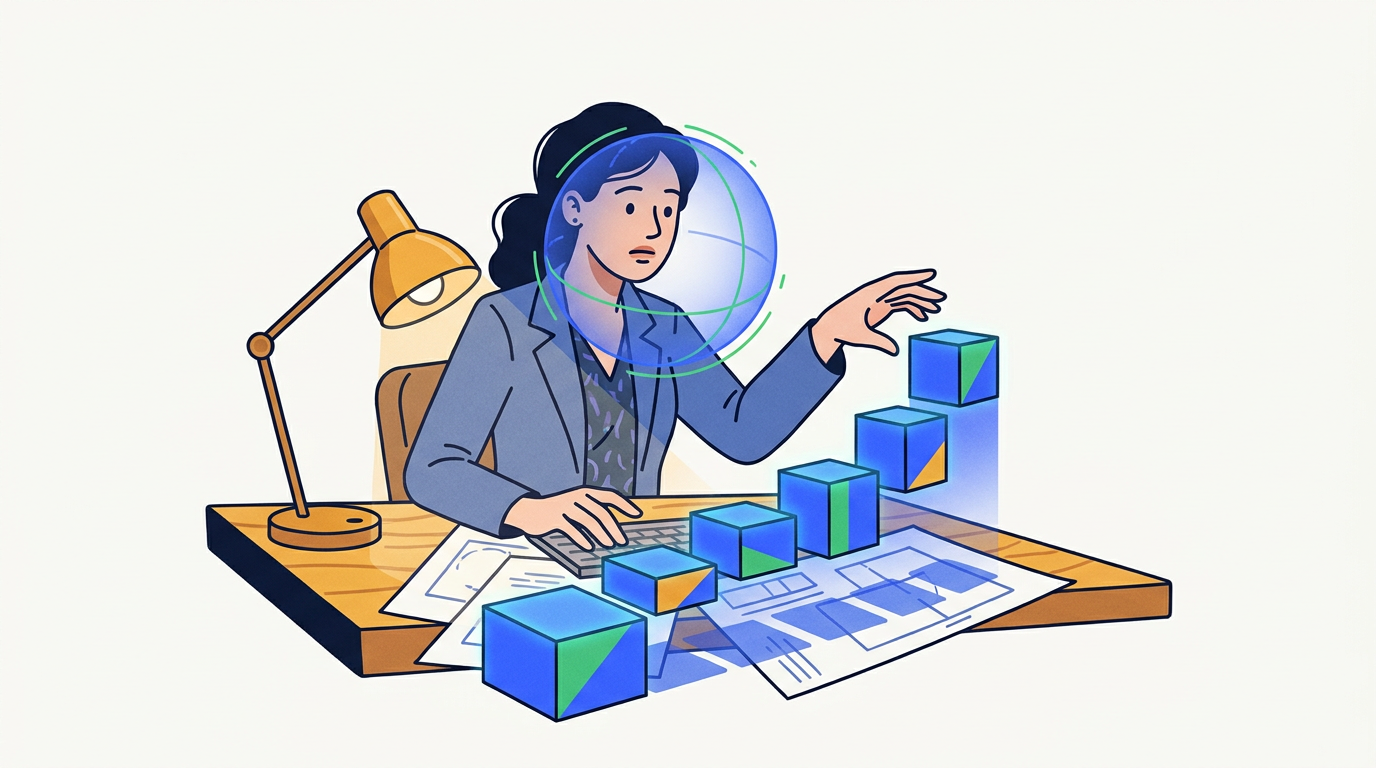
The future of work isn’t humans versus machines — it’s humans who use AI outpacing those who don’t. Automation will reshape most jobs rather than delete them, rewarding adaptable skills, hybrid models, and continuous reskilling over fixed roles and credentials.
The conversation about the future of work is broken. It’s a mix of doomsday predictions and breathless hype, leaving you with more anxiety than answers. One side shouts that robots are coming for every job, while the other sells a fluffy, jargon-filled utopia. Both are wrong.
The truth is simpler and more practical. The future of work with AI isn’t about a sudden replacement of people. It’s a gradual, profound shift in how we work. AI and automation are becoming tools, like the calculator or the spreadsheet, that augment our abilities. The real divide won’t be between humans and machines, but between those who learn to leverage these tools and those who don’t. This is your honest guide to what’s changing, what matters, and how to stay ahead.
Forget flying cars and robot butlers. The change is more subtle and sits right on your screen. Let’s imagine a day for a marketing manager, let’s call her Priya, in 2030.
Priya starts her day not by drowning in emails, but by reviewing a 3-point summary from her AI assistant. It has already sorted her inbox, flagged critical messages, and drafted replies for routine queries. Her first meeting is a campaign kickoff. Before, she’d spend hours pulling data. Now, her assistant has already analyzed the last quarter’s performance, identified the top-performing audience segments, and generated three initial creative concepts based on those insights.
During the meeting, Priya doesn’t take notes. A transcript is generated in real-time, with key decisions and action items automatically assigned to team members. Her role isn’t data entry or report generation; it’s strategic direction. She interrogates the AI’s suggestions, asking “Why did this audience respond better?” and “What’s a more unconventional angle we could take on this creative?”
Her afternoon is spent not on manually building a dozen ad variations, but on refining the single master prompt that will generate 100 versions for her AI to test. She’s not a “prompt engineer” — that’s just a basic skill now, like knowing keyboard shortcuts. She is a strategist, a creative director, and an editor, guiding powerful tools to execute her vision. The busywork that once consumed 60% of her week is gone. Her value is now 100% in her judgment, creativity, and analytical thinking. This is the core of the work of the future.
The shift Priya is experiencing isn’t about AI “doing” her job. It’s about AI handling the repetitive, predictable tasks so she can focus on the valuable, uniquely human ones. This is the fundamental change happening across the workforce.
Automation is a tool of liberation, not replacement. Think of it this way: a professional accountant wasn’t replaced by the spreadsheet; they were freed from manual ledger calculations to focus on financial strategy and advice. In the same way, AI is becoming the new interface for getting things done. Instead of clicking through ten menus to pull a report, you’ll simply ask for it. This is what we mean when we say AI is the new UI for automation. The most complex workflows will eventually feel like a simple conversation.
This has two major impacts on the labour market:
The mistake many people make is trying to automate the wrong things first. They focus on visible busywork like scheduling meetings. The real wins are in automating invisible bottlenecks: drafting initial reports, enriching sales leads with data, or producing first-pass content.
In this new landscape, your college degree or your current job title matters less than your stack of adaptable skills. The half-life of a technical skill is shrinking fast. The future belongs to the continuous learner. The most in-demand future skills fall into three buckets:
The panic around “reskilling” is understandable, but most advice is too generic. “Learn to code” or “get a data science certificate” isn’t a practical plan for most people. A better approach is to treat reskilling as an active, ongoing process, not a one-time event.
Forget expensive, time-consuming courses that might be irrelevant by the time you finish. The smartest way to upskill is by solving your own problems. We call this the Skill Stack Loop.
By repeating this loop, you build a “skill stack” that is directly relevant to your work. You’re not just collecting certificates; you’re building a portfolio of proven, valuable solutions. This is how you prove one workflow before you build ten, and it’s the most effective way to future-proof your career.
The impact of AI won’t be uniform. A radiologist’s future of work looks very different from a construction worker’s. Here’s a quick look at how a few key sectors will be reshaped.
The pandemic was a forced experiment in remote work, and it permanently broke the 9-to-5 office mold. The future of work is flexible, but “hybrid” means more than just letting people work from home two days a week.
Technology is the enabler for all of these models, but the tool is not the strategy. A new Slack channel won’t fix a broken communication culture. The shift to effective remote and hybrid work is a process and culture challenge first, and a technology challenge second.
The new world of work isn’t without its dark side. The same technology that enables flexibility can also enable a new level of surveillance.
The rise of AI-powered employee monitoring is a serious concern. Software that tracks keystrokes, analyzes communication sentiment, or generates “productivity scores” can create a culture of anxiety and mistrust. When your performance is judged by an algorithm that doesn’t understand context, it incentivizes performative busyness over real results. You end up optimizing your work to please the metric, not to do a good job.
This digital pressure contributes to a growing mental health crisis. The blurring lines between home and office in remote work can lead to burnout. The constant need to adapt and reskill in the face of technological progress can be exhausting. Employee well-being can no longer be a footnote in an HR policy; it must be a central part of leadership strategy. Protecting human attention is critical in a world designed to distract it.
Beyond surveillance, the integration of AI into the future of work raises profound ethical questions that companies must address head-on.
One of the biggest challenges is algorithmic bias. If an AI is trained on historical hiring data from a company that has historically favored a certain demographic, the AI will learn and perpetuate that bias, systematically filtering out qualified candidates from underrepresented groups. Transparency is key. Companies must be able to explain how their AI systems make decisions that affect people’s livelihoods.
Creating a culture of psychological safety is paramount. Employees need to feel secure enough to experiment, learn new skills, and even fail without fear of being penalized. If the transition to new ways of working is framed as a threat — “learn this or you’re out” — it will be met with resistance and fear. If it’s framed as a shared opportunity for growth and liberation from tedious work, it will foster innovation and resilience.
Individuals and companies can’t navigate this transition alone. The future of work requires a fundamental rethinking of our social and educational infrastructure.
Governments need to move beyond outdated unemployment systems. The challenge isn’t just mass unemployment; it’s continuous job displacement and transition. This calls for policies that support lifelong learning, such as portable skill accounts or subsidies for reskilling programs. They must also establish clear regulatory guardrails for the ethical use of AI in the workplace, protecting workers from invasive surveillance and algorithmic discrimination.
Our education system is perhaps the most in need of an overhaul. It’s still largely optimized for an industrial-era model of rote memorization and standardized testing. Schools and universities must shift their focus to teaching the skills that matter: analytical thinking, creative problem-solving, collaboration, and digital literacy. The goal should not be to produce graduates with a fixed set of knowledge, but to cultivate agile learners who know how to learn for the rest of their lives.
The future of work describes the ongoing evolution of jobs, workplaces, and workforces due to technological, economic, and social trends. It is primarily characterized by the integration of AI and automation, the rise of remote and hybrid work models, and a growing demand for adaptable skills like creativity and critical thinking over fixed credentials.
It’s highly unlikely AI will take your entire job. It’s far more likely that an AI will automate specific tasks within your job. The real threat isn’t AI itself, but a person who knows how to use AI to be more effective than you. Most jobs will be reshaped, not replaced, requiring you to work alongside AI, delegating repetitive tasks and focusing on strategy, creativity, and human interaction.
By 2030, the most valuable skills will be those that AI cannot easily replicate. These fall into two main categories:
Future-proofing your career isn’t about one magic bullet, but a continuous process of adaptation. Start here:

Part of the Thinker's Automation Labs content team. Researches with the SEO Blog Research Agent, drafts the piece, and routes it through review before publishing. Every claim is fact-checked against primary sources.
AI can’t see the future — it forecasts probabilities from patterns in past data. It’s remarkably good at…
Freelancing is becoming a core part of how work gets done, not a side hustle. AI and remote…
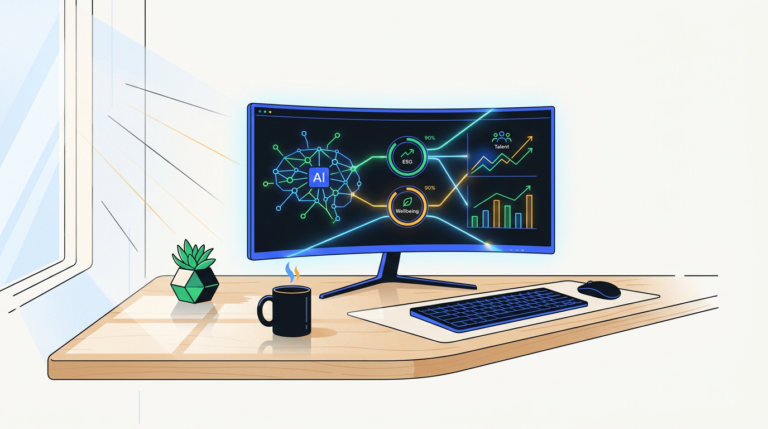
The future of HR is data-driven and skills-based. AI now handles screening and admin, freeing HR to focus…