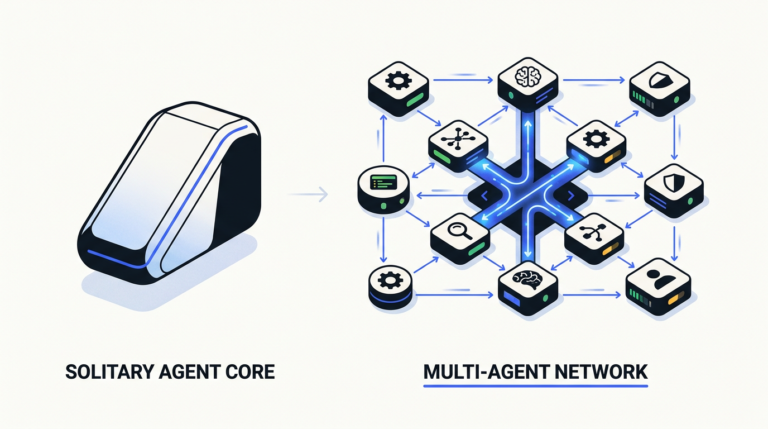
Single-Agent vs Multi-Agent Systems: A Clear Guide
A single-agent system uses one AI agent to handle a task end to end, while a multi-agent system…
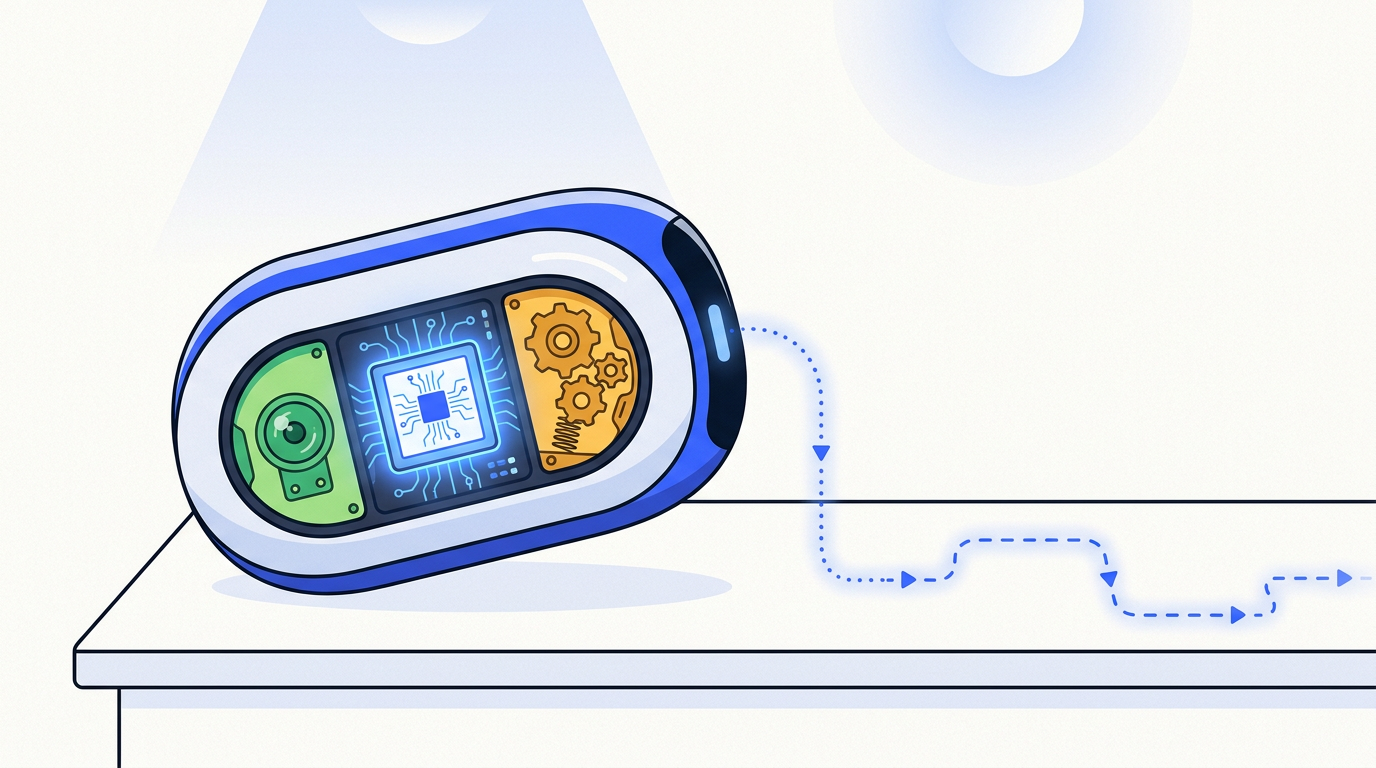
AI agents are software systems that pursue goals on their own. They plan, use tools, and complete multi-step tasks instead of just answering a single prompt like a chatbot. Powered by large language models, they can browse, write code, and run workflows. This guide explains how agentic AI works, with examples.
Let’s be honest. For all the talk about AI, most of what you’ve used so far probably feels like a smarter search engine or a clever autocomplete. You ask a question, you get an answer. You give a command, it generates some text or an image. It’s a one-and-done conversation.
That’s all about to change. The next step isn’t just better chatbots. It’s software that doesn’t wait for your next command. It’s software you give a goal, not just a prompt.
This is the world of AI agents. These aren’t just a small upgrade. They represent a fundamental shift in how we interact with computers. Instead of you working the software, the software works for you. Forget single questions. Think entire projects.
This guide is your no-nonsense introduction to AI agents. We’ll cut through the hype to explain what they are, how they actually work, and why they’re a much bigger deal than the chatbot you played with last week.
An AI agent is a program that can perceive its environment, make its own decisions, and take actions to achieve a specific goal.
Think of it this way: if a chatbot is a customer service rep with a script, an AI agent is a smart, proactive intern you’ve just hired. You don’t tell the intern “click here, then type this.” You say, “Hey, can you research our top three competitors and put a summary of their marketing strategies on my desk by Friday?”
The intern then figures out the steps: go to Google, search for company A, find their blog, analyze their social media, repeat for companies B and C, synthesize the findings, and write the report. That’s an agent. It’s an autonomous system that plans and executes a series of tasks to reach a desired outcome.
It’s easy to lump all these “AI” things together, but they’re fundamentally different. Getting this distinction is the key to understanding why agents are such a big deal.
| Type | How it Works | Analogy | Example |
|---|---|---|---|
| Chatbot | Reactive. Answers one prompt at a time. No memory of a larger goal. | A call center operator with a script. | “What are your store hours?” -> “We are open 9-5.” |
| Assistant (Siri/Alexa) | Task-based. Executes simple, pre-defined commands. Can chain maybe one or two things. | A remote control with voice commands. | “Set a timer for 10 minutes.” |
| AI Agent | Proactive & Autonomous. Given a goal, it creates and executes a multi-step plan. | A smart intern who can use tools. | “Book my trip to the conference in Miami next month.” |
The core difference is autonomy and action. A chatbot is a conversationalist; it waits for you to talk. An AI agent is an actor; it goes and does things.
A chatbot’s world is the text box. It takes your words in and puts its own words out. An AI agent sees the text box as just one of many tools. It can also use a web browser, connect to your Google Calendar, run code, or access a database. Its goal isn’t to chat with you—its goal is to accomplish the task you assigned it in the digital world. This is the leap to what many call agentic AI.
So how does an AI agent “think”? It’s not magic. Most agents operate on a simple but powerful cycle often called the Perceive-Plan-Act loop (or Observe-Think-Act, if you prefer).
It’s a continuous loop that lets the agent make progress, handle surprises, and correct its own mistakes until the goal is met.
Perceive (Observe): The agent gathers information. It takes a snapshot of its environment. This could mean reading the contents of a webpage, getting an error message back from some code it just tried to run, or analyzing the latest data in a spreadsheet.
Plan (Think): This is the reasoning step. Based on its main goal and the new information it just perceived, the agent decides what to do next. It might break a large goal (“research competitors”) into a smaller sub-task (“find competitor A’s website”). Or, if its last action failed, it might revise its plan (“Okay, that Google search didn’t work. Let me try a different search query.”).
Act: The agent executes the chosen action. This is where it uses its tools. It might click a link, type into a search bar, write a line of code, or call an API to save a file.
After the action is complete, the loop starts over. The agent perceives the result of its action and the new state of the environment, and then it plans its next move. This cycle repeats until the final goal is achieved.
Behind the loop, a few key components make everything possible. You don’t need to be an engineer to get the gist.
Models: This is the agent’s “brain,” typically a large language model (LLM) like GPT-4 or a smaller, specialized model (SLM). The model provides the raw intelligence—the ability to understand language, reason through problems, and formulate plans.
Memory: If the model is the brain, memory is its notepad. Agents need to remember what they’ve done, what they’ve learned, and what the overall goal is. This includes short-term memory (the context of the current task) and long-term memory (a database of past experiences it can draw on to become smarter over time).
Planning: This is the strategy module. It’s the part of the agent that breaks down a vague goal like “Plan a vacation” into a concrete sequence of actions. It creates the checklist, and the agent works its way through it, adapting the plan as it goes. This is the core of workflow automation.
Tool Use: This is what separates agents from chatbots. Tools are the agent’s hands. They are the external applications and connections (APIs) that let the agent interact with the world beyond its own code. A tool could be a web browser, a code interpreter, a connection to your email, or access to a company’s internal knowledge base. The more tools an agent has, the more capable it is.
You’ve heard of LLMs (Large Language Models) like ChatGPT. They are the big, powerful, all-purpose brains. They provide the general reasoning and world knowledge that allows an agent to tackle complex, open-ended goals. They are the brilliant, creative strategist.
But they can be slow and expensive to run for every little thing.
This is where SLMs (Small Language Models) come in. These are smaller, faster, and cheaper models that are trained for very specific tasks. Think of them as specialists. You might have an SLM that is an expert at one thing: classifying customer support tickets as “Urgent,” “Sales Inquiry,” or “Technical Issue.”
The most effective agentic AI systems often use a hybrid approach called orchestration. A powerful LLM acts as the manager or “conductor,” creating the high-level plan. It then delegates the smaller, repetitive tasks to a team of specialized, efficient SLMs. This hierarchical structure is more powerful, faster, and more cost-effective than using one giant model for everything.
Not all agents are created equal. Like living organisms, they range from incredibly simple to mind-boggingly complex. They are generally categorized by how intelligent and autonomous they are.
These are the most basic types of agents.
Simple Reflex Agents: These agents act only on the current situation. They have no memory of the past. Their logic is a simple “if this, then that.”
Model-Based Agents: A step up. These agents maintain an internal “model” or representation of the world. They can use this model to handle situations where they can’t see everything at once.
This is where agents start to feel truly “smart.” They don’t just react; they think ahead.
Goal-Based Agents: These agents have an explicit goal and will consider the future consequences of their actions to find a path to that goal.
Utility-Based Agents: The most sophisticated type of “rational” agent. They don’t just want to achieve the goal; they want to achieve it in the best way possible. They have a “utility function” to score how good a particular outcome is.
optimization based on what you value (time, money, distance). This is a utility-based agent.This is the cutting edge, where agents begin to evolve and work together.
Learning Agents: These agents can improve their own performance over time. They have a learning element that allows them to receive feedback on their actions and adapt their behavior to become more effective. All the previously mentioned agent types can be upgraded into learning agents.
Multi-Agent Systems: This involves multiple AI agents interacting in a shared environment. They might collaborate to solve a problem that’s too big for one agent, or they might compete.
agentic AI research.This all sounds futuristic, but you can find early versions of AI agents at work today.
Automated Software Development: The agent “Devin” made waves by showing it could take a software development task from a user, write the code, debug its own errors, and complete the project. This is a complex multi-agent system using planning, web browsing, and code execution tools.
Travel Planning: You give an agent a goal: “Book me a round-trip flight to San Francisco for the first week of June, staying in a hotel near the Moscone Center for under $400/night.” The agent would then browse airline and hotel websites, compare prices, and present you with the optimal itinerary for approval.
Data Analysis: Instead of you manually exporting data, cleaning it in Excel, and building charts, you could tell an agent: “Take last quarter’s sales data, find our top 3 performing products by region, and create a slide deck summarizing the results.”
Customer Support Automation: A customer emails, “My order is late.” A simple chatbot might say, “Sorry to hear that.” An AI agent would perceive the email, use a tool to look up the customer’s order number in Shopify, use another tool to check the tracking status with FedEx, and then draft a reply: “Hi Jane, I see your order #1234 is currently out for delivery and is scheduled to arrive today by 5 PM. You can track it here: [link].”
Scientific Research: An agent could be tasked with “Reviewing the latest 100 papers on CRISPR gene editing and summarizing any new techniques for targeting protein X.” It would use academic search portals, parse PDF documents, and synthesize the findings.
You’re going to hear a lot of names thrown around. Here’s a simple way to categorize them.
For Developers (The Toolkits): Frameworks like LangChain, LlamaIndex, and AutoGen are not agents themselves. They are toolkits—collections of code and libraries that developers use to build their own custom agents. As a business owner or creator, you don’t need to use these, but it’s good to know what they are. They are the “engine parts” of the agent world.
For Users (The Applications): This is the more interesting category for most people. These are platforms that aim to give you agent-like capabilities without coding.
workflow automation (“if this, then that”) to more agentic sequences (“if this, then think about it, then do one of these three things”).human intervention step for any critical action.This technology is incredibly powerful, which means we need to be clear-eyed about its risks. This isn’t a magical solution to every problem.
human intervention are non-negotiable.The potential is huge, but diving in headfirst is a recipe for disaster. The smart approach is to start small and be strategic.
Don’t Automate the Whole Company. Start with a single, well-defined, low-risk workflow. Look for tasks that are repetitive, rule-based, and involve moving information between different software systems. Report generation, data entry, and lead qualification are classic starting points.
Use the Tools You Already Have. You may already have agent-like capabilities in your current software stack. ChatGPT Plus’s “Advanced Data Analysis” feature is a simple agent that can write and run code. Zapier’s AI features can help build more intelligent, multi-step workflows. Explore these before you invest in a new, unproven platform.
Embrace the “Human in the Loop.” This is the most important rule. Don’t aim for 100% autonomy right away. Design your systems so the agent does the grunt work and then presents its results or a proposed action to a person for final approval. The agent researches the flights, you click the “buy” button. The agent drafts the email, you give it a final read-and-send. This gives you the efficiency of automation with the safety of human oversight.
Think Like a Manager. The best way to work with an agent is to treat it like a new employee. Give it clear goals, define the resources it can use, set clear boundaries, and check its work. If you’re looking to identify the best opportunities for agentic automation in your own operations, our team can help you build a practical roadmap.
We are at the very beginning of this shift. What we see today are the early, clumsy prototypes of a much bigger paradigm.
The future isn’t about one single, all-powerful agent. It’s about multi-agent systems—teams of specialized agents that collaborate to manage complex projects. Imagine a “marketing team” of agents, with a strategist agent delegating tasks to a copywriting agent, a graphic design agent, and a social media scheduling agent.
These systems will also become more proactive. Instead of waiting for a command, your agent will anticipate your needs. It might pop up and say, “I see you have a meeting with Acme Corp tomorrow. I’ve pulled up their latest financial report and summarized your last three email conversations with their CEO. Would you like a briefing?”
Ultimately, agents may become the new operating system for how we interact with all digital technology. Instead of learning the intricacies of dozens of different apps, you’ll simply state your goal in plain language, and a team of agents will work across those apps to make it happen.
That future is still a few years away. For now, the smartest thing you can do is understand the core concepts, start experimenting with small-scale workflow automation, and prepare for the day when your software truly starts doing the work for you.
What’s the simplest way to think about an AI agent?
Think of it as a smart personal assistant that lives in your computer. You give it a goal, and it uses various apps and websites to get the job done on its own, reporting back to you when it’s finished.
Are AI agents the same as robots?
Not exactly. A robot is an agent with a physical body that can move and interact with the real world (like a factory arm or a self-driving car). The AI agents we’ve discussed are purely software-based; their “environment” is the internet, your files, and your applications.
What is ‘agentic AI’?
Agentic AI is simply the term for AI systems that have the capacity to act autonomously to achieve goals. It emphasizes the “doing” part of AI—planning, using tools, and executing tasks—rather than just the “thinking” or “talking” part, like a standard chatbot.
Can I build my own AI agent without coding?
Yes, to an extent. Platforms like Zapier, Make.com, and various no-code tools are incorporating AI features that let you create multi-step, agent-like workflows without writing any code. You can chain actions together based on AI-driven decisions.
Are AI agents safe to use?
They can be, but safety requires careful design. It’s crucial to limit an agent’s permissions, use a “human-in-the-loop” model for critical tasks (where a person must approve actions), and be aware of potential security and control risks. Never give an agent unrestricted access to sensitive systems.

Part of the Thinker's Automation Labs content team. Researches with the SEO Blog Research Agent, drafts the piece, and routes it through review before publishing. Every claim is fact-checked against primary sources.
A single-agent system uses one AI agent to handle a task end to end, while a multi-agent system…
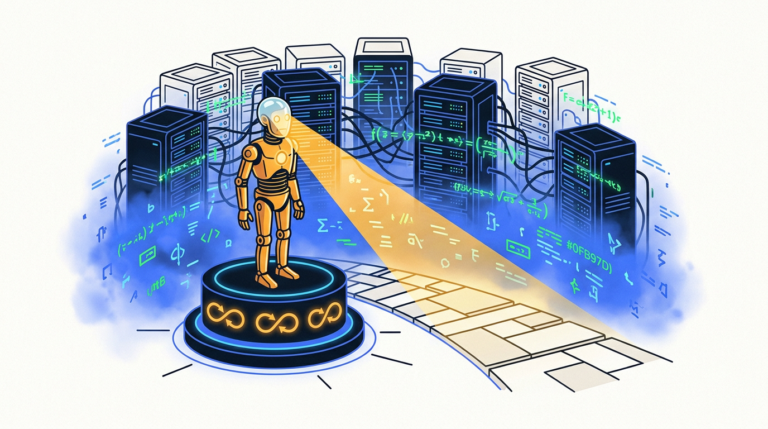
A learning agent is an AI agent that improves its own performance over time by learning from feedback.…
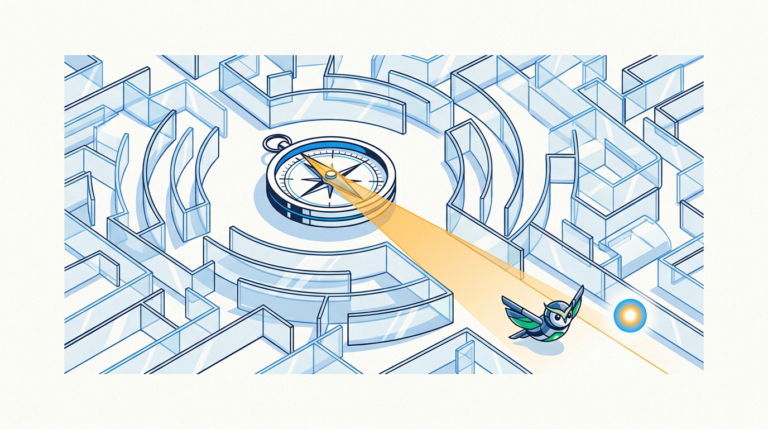
A goal-based agent is an AI agent that chooses actions by asking whether they move it closer to…