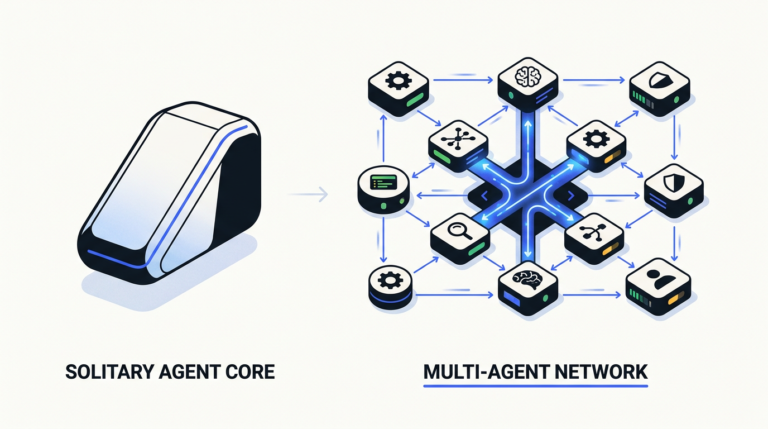
Single-Agent vs Multi-Agent Systems: A Clear Guide
A single-agent system uses one AI agent to handle a task end to end, while a multi-agent system…

AI agents are autonomous systems that understand a goal, create a plan, and use tools to execute tasks without step-by-step instructions. Unlike chatbots that just talk, this agentic AI acts—browsing the web, managing files, and completing complex workflows—to achieve objectives on your behalf.
For the past year, you’ve been talking to chatbots. You ask a question, you get an answer. It’s been impressive and occasionally useful, but that conversational model was just the warm-up act. The main event is just getting started, and it’s called AI agents.
If chatbots are brilliant librarians who can find and explain anything, AI agents are the skilled assistants you hire to get a job done. You don’t tell them how to do something step-by-step; you give them a goal, and they figure out the rest. This shift from conversation to autonomous action is the most important development in AI today.
An AI agent is a software program that can perceive its digital environment, make decisions, and take autonomous actions to achieve a specific goal. It is a practical application of the broader Intelligent Agents concept, going beyond simply responding to a prompt by actively planning and working towards an objective until it’s complete.
This ability to act on its own is why you’ll hear the terms autonomous and agentic AI used so often. They refer to this new class of AI that doesn’t just think—it does.
The easiest way to grasp the power of AI agents is to compare them to the chatbots you already know, like ChatGPT or Claude. A chatbot is a conversational partner that operates in a simple loop: you give it a prompt, and it gives you a response. Its “world” is the chat window, and it waits for you to tell it what to do next.
An AI agent, however, is a goal-oriented system. You give it an objective, and it creates and executes a plan to achieve it. It can use tools, learn from its actions, and adapt its strategy until the job is done. It’s the difference between asking a chef for a recipe and asking them to cook you dinner.
| Chatbot | AI Agent | |
|---|---|---|
| Core Purpose | Answer a prompt, have a conversation. | Achieve a goal, complete a task. |
| Action | Generates text, code, or images. | Takes actions using tools (e.g., browses web, sends emails, writes files). |
| Autonomy | Low. Waits for the user’s next prompt. | High. Can run a multi-step process on its own. |
| Memory | Limited to the current conversation (stateless). | Maintains memory of its steps and observations to inform future actions (stateful). |
AI agents work through a continuous loop of perception, reasoning, and action. They use a large language model (LLM) as their “brain” to understand goals, break them down into steps (planning), use digital tools to execute those steps (tool use), and learn from the results (memory) to complete a complex task. This entire process is managed through orchestration.
Let’s break down this cycle.
1. Planning and Reasoning
It all starts with a goal you provide, like: “Research the best noise-cancelling headphones for under $300 and create a comparison table.” The agent’s reasoning engine, powered by an LLM like GPT-4, breaks this goal down into a logical sequence of steps. This planning phase might produce a plan like this:
2. Tool Use
This is where the agent moves from thinking to doing. An agent operates by using a predefined set of tools, such as a web browser, a calculator, or the ability to write and execute code. For the plan above, the agent would perform tool use by calling the web_search tool for step 1 and the browse_website tool for step 3. The agent’s LLM brain decides which tool is needed for each step of the plan.
3. Memory and Observation
After every action, the agent observes the result. After using the web_search tool, the observation is “Here is a list of 10 search results.” This result is added to the agent’s short-term memory. The agent then looks at its original plan, its memory of what it has already done, and the new observation to decide its next action.
This cycle—Plan → Act (with a tool) → Observe → Update Plan—repeats until the agent determines that the original goal has been met.
Examples of AI agents include software that can autonomously book travel by searching flights and hotels, research assistants that browse the web to compile reports, and coding assistants that can write, debug, and execute code to build a simple application based on a user’s request.
These agents fall into a few broad categories:
multi-agent approach.This all sounds great, but what can you actually do with AI agents today?
For Individuals and Creators:
For Businesses:
The AI agent space is a chaotic gold rush, but most tools are either too complex for non-developers or too flimsy to be useful. Here’s our honest take on where to look.
For the Curious (and Developers): AutoGen & CrewAI
These are open-source Python frameworks, not apps. They are the foundation on which many future agentic apps will be built and excel at creating multi-agent teams. Verdict: Worth knowing about to see where the future is headed, but not a practical tool for most people.
The DIY Power Tool: AgentGPT & AutoGPT
These viral projects let you give an AI a goal and watch it try to execute. They are fascinating but often unreliable, prone to getting stuck in loops, and can be expensive to run. Verdict: A fun experiment, but don’t bet your business on them for a critical workflow.
The Practical Choice for Business: Custom-Built Agents
For any serious business use case, off-the-shelf agent platforms are not reliable enough yet. The most effective approach is to build a custom AI agent tailored to your specific needs by defining a repetitive digital process for a robust, autonomous system to execute.
This is exactly what we do in our Services. If you have a task that requires someone to click, type, and think through a digital process, we can build an agent to do it for you—faster, cheaper, and 24/7. It’s the most direct path to getting real value from agentic AI today.
We wouldn’t be honest if we didn’t tell you the downsides. AI agents are not a silver bullet and come with several challenges.

Part of the Thinker's Automation Labs content team. Researches with the SEO Blog Research Agent, drafts the piece, and routes it through review before publishing. Every claim is fact-checked against primary sources.
A single-agent system uses one AI agent to handle a task end to end, while a multi-agent system…
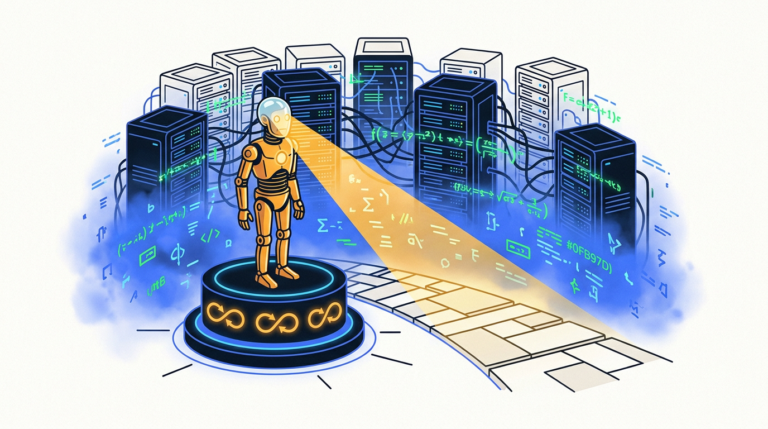
A learning agent is an AI agent that improves its own performance over time by learning from feedback.…
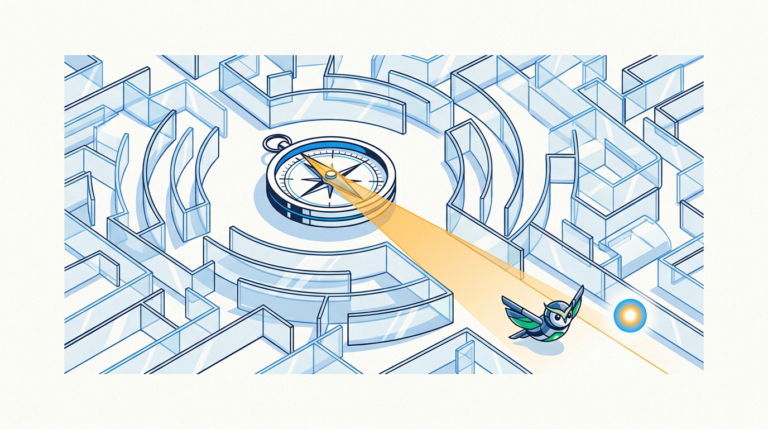
A goal-based agent is an AI agent that chooses actions by asking whether they move it closer to…